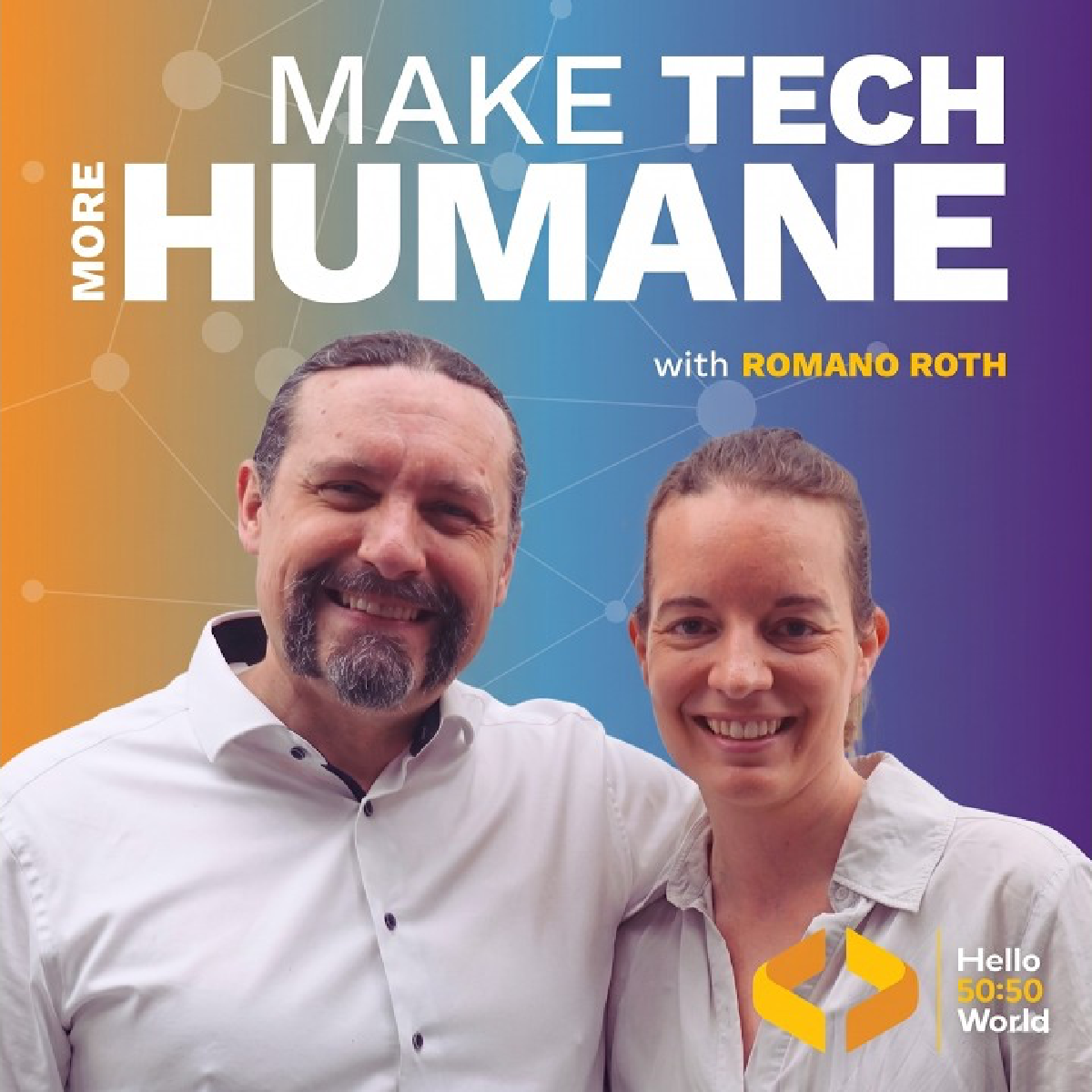
I joined Lisa Stähli on the Hello 50:50 World podcast, the show with the mission to make tech more humane, for a conversation about what actually happens when software teams add AI to the way they work. We talked about how AI is reshaping software engineering, DevOps and agile ways of working, where the real bottlenecks sit, the human cost of moving faster, and why the organisation you build around the technology is what decides whether AI helps or hurts.
AI Accelerates Everything, the Good and the Bad#
The point I keep coming back to is that AI accelerates everything. Teams with strong engineering practices pull ahead fast, because AI amplifies the discipline they already have. Teams sitting on weak foundations just pile up problems quicker, because AI keeps generating more of whatever is already there.
That is why the question is never simply “should we adopt AI.” A team with solid agile practices, good automation, and a real culture of quality gets a multiplier. A team without those foundations gets the same multiplier applied to its mess. Speed is not neutral. It magnifies whatever you bring to it.
How the Value of DevOps Has Changed#
DevOps started as a way to break down the wall between development and operations, to ship faster and more reliably. Over the last decade the value has shifted. It is less about a specific toolchain and more about the flow of value through the whole organisation, from idea to production and back again through feedback.
That shift matters even more with AI in the loop. When you can generate code, tests, and documentation in seconds, the constraint moves. The interesting question is no longer how fast you can write software. It is how fast you can learn whether what you built was the right thing.
The Bottleneck Usually Sits Before Engineering#
This is where value stream mapping comes in. When you map every step from idea to production and measure lead time, process time, and how often work is complete and accurate, you usually find that the bottleneck is not in engineering at all. It sits before engineering: in decision-making, prioritisation, handoffs, and waiting.
AI that only speeds up the engineering step optimises a part of the system that was not the constraint. You end up producing more, faster, while the real delay stays exactly where it was. Fixing the flow matters more than accelerating one station on the line.
A Shared Culture of Quality and Shifting Left#
Speed without quality is just faster failure. Shifting left, moving testing, security, and quality concerns earlier, becomes more important when AI is generating large volumes of code. You cannot inspect quality in at the end. You have to build a shared culture where quality is everyone’s responsibility from the start.
With AI in the mix, that culture is the safeguard. The model produces plausible output at scale, and someone still has to own whether it is correct, secure, and maintainable.
Does Agile Survive AI?#
People ask whether agile survives AI. The practices and ceremonies may change, but the principles stay. Short feedback loops, working software, responding to change, close collaboration: those become more valuable when the cost of producing a change drops, not less. If anything, AI makes the agile principles more relevant, because the ability to learn fast is now the real competitive edge.
The Human Cost of Going Faster#
There is a human cost we do not talk about enough. When everything accelerates, people face more task switching, more cognitive overload, and a real risk of burnout. AI can remove tedious work, but it can also raise the expectation that everyone simply does more, faster, all the time.
So the question of how you adopt new ways of working without burning people out is not a soft topic. It is central. You have to design the change around people, give them time to learn and unlearn, and protect focus instead of fragmenting it further. Sustainable pace was always an agile principle. It becomes essential when the machine never gets tired.
Roles Are Merging#
Roles are merging. The sharp lines between developer, tester, operations, and analyst blur when AI can assist across all of them. I think we move toward smaller, cross-functional teams, the “three plus minus two” idea, where a handful of people with broad skills and good tooling can own a meaningful slice of value end to end.
That changes what we hire for and how we organise. It is less about deep specialisation in one narrow task and more about people who can work across the whole flow.
The Skills That Matter Most#
If roles merge and AI handles more of the routine, the skills that matter most are systems thinking and critical thinking. You have to see the whole system: the inputs you allow in, the data you rely on, the output you ship, and the actions you let AI take on your behalf. And you have to think critically about what the machine gives you, because it produces the average of what it has seen, not necessarily the right answer for your context.
Those are human skills, and they are exactly the ones that do not get automated away.
Why I Stay Optimistic#
A lot stays the same. The fundamentals of good engineering, the need for feedback, the importance of people working well together: none of that disappears. That is why I stay optimistic. Technology alone is never the point. The organisation you build around it, the people, the processes, and the technology together, is what decides whether AI helps or hurts.
Get that combination right, and AI becomes a genuine force multiplier for teams that already know how to build well.
Key Takeaways#
- AI accelerates everything, good and bad. Strong engineering practices get a multiplier; weak foundations just pile up problems faster.
- The bottleneck usually sits before engineering. Value stream mapping reveals that decisions, prioritisation, and handoffs delay flow more than coding speed.
- Quality has to shift left. When AI generates code at scale, a shared culture of quality is the safeguard, and someone always owns correctness.
- Agile principles survive AI. Practices may change, but short feedback loops and the ability to learn fast matter more, not less.
- Mind the human cost. Task switching, cognitive overload, and burnout are real; adopt new ways of working at a sustainable pace.
- Roles are merging. Smaller cross-functional teams with broad skills own value end to end.
- Systems thinking and critical thinking win. They are the human skills AI does not replace.
Listen to the full episode on the Hello 50:50 World podcast, hosted by Lisa Stähli: https://www.hello5050.world/podcast