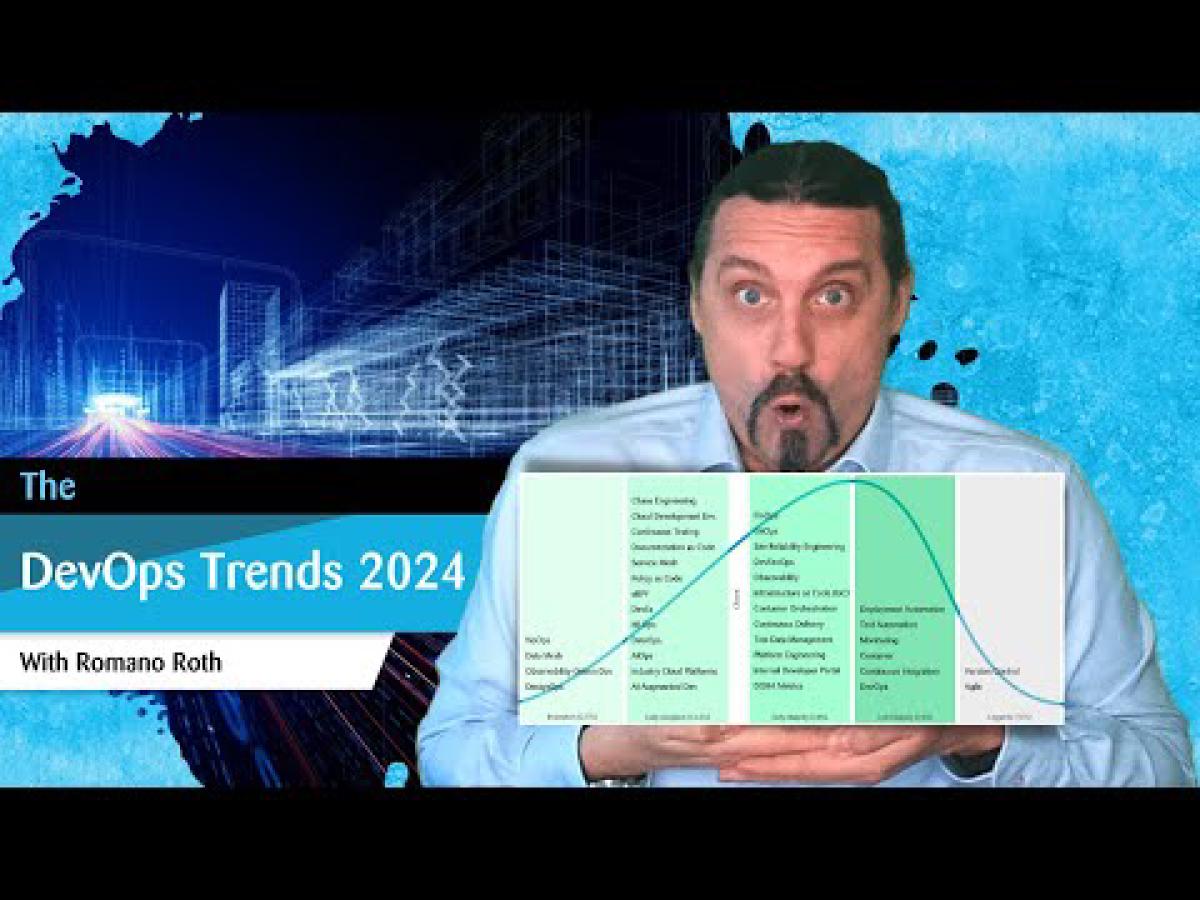
Every year, I go through the latest reports, articles, and industry discussions to compile a comprehensive view of the DevOps trends shaping our industry. For 2024, I mapped every major trend onto the technology adoption lifecycle to give you a clear picture of where each technology, methodology, or capability stands in terms of adoption. This framework helps you understand not just what is trending, but how mature each trend really is.
The Technology Adoption Lifecycle as a Framework#
The technology adoption lifecycle divides adopters into five groups: Innovators (2.5%), Early Adopters (13.5%), Early Majority (34%), Late Majority (34%), and Laggards (16%). Each group has a different willingness to adopt new technologies. By placing DevOps trends into these segments, we can see at a glance which practices are mainstream and which are still emerging.
This is not just an academic exercise. If you are a technology leader, this mapping tells you where the safe bets are and where the opportunities for competitive advantage lie.
Late Majority: The Established Practices#
The Late Majority segment contains practices that are now widely adopted, even by conservative enterprises:
- DevOps itself, as a mindset, culture, and set of technical practices for organizing across the value stream
- Continuous Integration (CI), where developers frequently merge code into a central repository with automated builds and tests
- Containers, the lightweight, standalone executable environments that have become the norm for deploying applications
- Monitoring, the continuous collection and analysis of metrics and logs for tracking system health
- Test Automation, using software tools to execute tests and ensure quality standards
- Deployment Automation, removing manual steps from the deployment process to ensure consistency and reduce human error
These are no longer differentiators. They are table stakes.
Early Majority: The Growth Zone#
The Early Majority segment is where the most dynamic activity happens in 2024. These practices are being adopted by a growing number of organizations:
- DORA Metrics (Deployment Frequency, Lead Time for Changes, Time to Restore, Change Failure Rate) for measuring DevOps effectiveness. A word of caution: KPIs are a two-sided sword. Pay close attention when implementing them, or they can harm your organization.
- Internal Developer Portal (IDP), a centralized platform giving developers access to tools, resources, and documentation
- Platform Engineering, the discipline of designing standardized toolsets for developer productivity. This is the big trend for 2024, fully aligned with Gartner’s Top Technology Trends.
- Test Data Management, handling realistic, compliant, and secure test datasets. Remember: developers should never test on production data.
- Continuous Delivery (CD), automatically deploying artifacts to staging environments after CI
- Container Orchestration, with Kubernetes as the de facto standard
- Infrastructure as Code (IaC), managing infrastructure through code rather than manual processes
- Observability, using logs, metrics, and traces for system transparency
- DevSecOps, integrating security as a continuous part of the development process
- Site Reliability Engineering (SRE), applying software engineering to infrastructure and operations
- GitOps, using Git as the single source of truth for infrastructure and application management
- FinOps, bringing financial accountability to cloud spending. Cost is a nonfunctional requirement, and it is a constraint on every backlog item.
Platform Engineering is the biggest DevOps trend for 2024. This is completely in line with what Gartner is telling us about the top technology trends.
Early Adopters: The Competitive Edge#
The Early Adopters segment is where forward-thinking organizations invest to gain competitive advantage:
- AI-Augmented Development, integrating AI into coding and testing (think GitHub Copilot). Compliance and security issues are still slowing broader adoption, but I expect this to move into Early Majority by 2025.
- Industry Cloud Platforms, specialized cloud services tailored to specific industries like healthcare and finance
- AIOps, applying AI to enhance and automate IT operations, especially valuable in complex cloud environments
- ChatOps, integrating communication tools with operational tasks for real-time automation
- DataOps, an agile approach to distributed data architecture management
- MLOps, streamlining the machine learning model lifecycle from development to production
- DevEx (Developer Experience), focusing on tools, practices, and culture that make development efficient and enjoyable
- eBPF, enabling programmable packet filtering and kernel-level observability in Linux
- Policy as Code, defining and enforcing policies through code for automated compliance
- Service Mesh, a dedicated infrastructure layer for microservice communication
- Documentation as Code, versioning and automating documentation within the development process
- Continuous Testing, automating testing throughout the entire software development lifecycle
- Cloud Development Environments, hosting development environments in the cloud for flexibility and collaboration
- Chaos Engineering, deliberately injecting controlled failures to uncover vulnerabilities
Innovators: The Frontier#
At the very edge of adoption, the Innovators segment contains concepts that only visionary teams are exploring:
- DesignOps, optimizing design team workflows and collaboration
- Observability Driven Development (ODD), building applications with observability baked in from the start
- Data Mesh, a decentralized, domain-oriented approach to data management at scale
- NoOps, aiming to minimize or eliminate traditional IT operations through extreme automation
My Predictions for 2025#
Based on the 2024 landscape, here is what I expect for 2025:
DORA Metrics, Internal Developer Portals, Platform Engineering, Continuous Delivery, and Container Orchestration will start moving from Early Majority to Late Majority. On the Early Adopters side, AI-Augmented Development, AIOps, MLOps, Continuous Testing, and Cloud Development Environments will successfully cross the chasm into Early Majority.
The chasm between Early Adopters and Early Majority is the most critical gap in the adoption lifecycle. Many technologies fail to gain mainstream acceptance at this point. It will be fascinating to see which of these trends make the jump.
Key Takeaways#
- Platform Engineering is the top DevOps trend for 2024, confirmed by both industry research and Gartner’s analysis
- The technology adoption lifecycle provides a powerful lens for evaluating where each trend stands and where to invest
- AI is entering DevOps at multiple levels: development, operations, and machine learning lifecycle management
- Established practices like CI, containers, and monitoring are now baseline expectations, not differentiators
- Financial accountability (FinOps) and security integration (DevSecOps) are becoming standard parts of the DevOps toolkit
- The biggest question for 2025: which Early Adopter technologies will successfully cross the chasm into mainstream adoption?