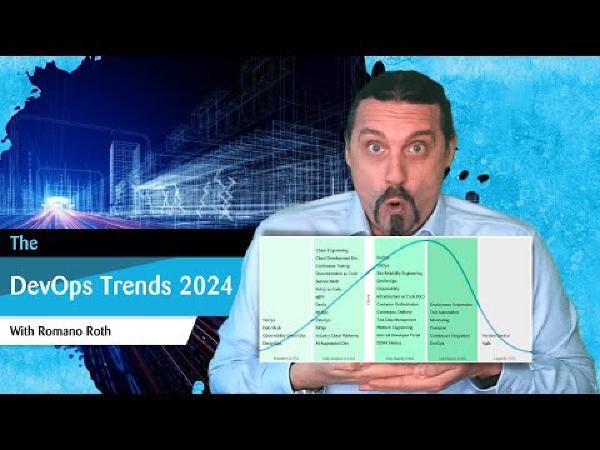
Every year, I go through the latest reports, articles, and industry discussions to compile a comprehensive view of the DevOps trends shaping our industry. For 2024, I mapped every major trend onto the technology adoption lifecycle to give you a clear picture of where each technology, methodology, or capability stands in terms of adoption. This framework helps you understand not just what is trending, but how mature each trend really is.
In this episode of the DevTalk podcast, my colleague Kerry Lothrop and I have a conversation about the state of DevOps. We have known each other for many years at Zühlke, and Kerry wanted to pick my brain on what DevOps really means today, where companies struggle, and where the industry is heading.
At the Conf42 DevSecOps 2024 conference, I presented my approach to architecting for continuous delivery. After more than 21 years at Zühlke, working across industries on DevOps transformations, I keep seeing the same fundamental problem: value streams broken by walls of confusion. In this talk, I walk through how organizations can move from project thinking to product thinking, build in quality and security from the start, architect for operability, and use platform engineering to scale it all.
As Chief of DevOps and Partner at Zühlke, I have spent over two decades helping companies continuously deliver value. In this video, I walk through the complete Zühlke DevOps offering, from our understanding of DevOps and the challenges of scaling it, to our concrete service offerings including the Digital Factory and the Platform Plane.
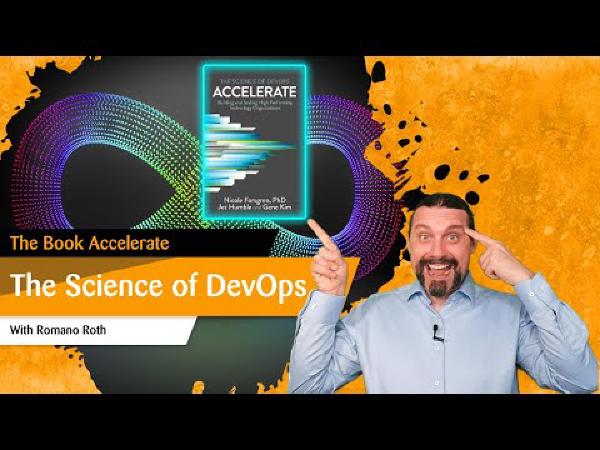
In this video, I take a deep dive into the science behind DevOps. Specifically, I look at the DORA metrics, where they come from, and the book Accelerate that provides the scientific foundation for everything we know about high-performing software delivery organizations.
DevOps transformations look simple on paper. Take an existing environment, add the Spotify model, throw in SAFe, sprinkle some Team Topologies, add DevOps and platform engineering, stir well, add as many tools as possible, and stir again. What happens? It crashes. And people say “DevOps is bullshit.”
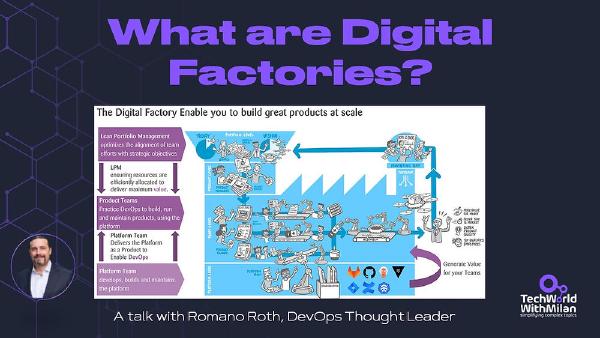
a talk with Romano Roth, DevOps Thought Leader and Dr. Milan Milanović Architecture Thought Leader. Source: https://newsletter.techworld-with-milan.com/p/what-are-digital-factories
1. Romano’s short biography # I’m Romano Roth, Chief of DevOps and Partner at Zühlke. My journey with Zuhlke began 21 years ago. Over the years, I’ve evolved from an expert software engineer and software architect to a consultant. Throughout this journey, one question has always fueled my passion: How can we continuously deliver value while ensuring quality and automation?
In this podcast episode, I have a conversation with Peyton Einhaus about one of the most challenging aspects of any transformation: dealing with resistance. Whether you are running an agile transformation, a DevOps transformation, or any organizational change, resistance is always present. The question is how you handle it effectively.
Embedded and IoT devices are becoming increasingly popular in today’s world. These devices are used in various industries, such as healthcare, manufacturing, consumer goods and home automation. Ensuring the quality of these devices is crucial to ensure their reliability, safety, and functionality. But how to do that?
Sometimes in the world of platform engineering, we need to pause and appreciate the digital landscapes we build every day. This short, playful video is a guided meditation for platform engineers. Find a comfortable position, take a deep breath, and let me guide you through the world you create.
Every DevOps enthusiast faces the same challenge at some point: you know DevOps works, your team knows it works, but the decision makers want proof. They want a business case. In this talk at ContainerDays 2019, I break down a practical framework for convincing CIOs and managers to fund your DevOps transformation.
You want to do DevOps. Your team wants to do DevOps. Even your CIO wants to do DevOps. But then comes the inevitable question: “What is the business case?” In this five-minute Ignite Talk at DevOpsDays, I share a simple but powerful tool to convince decision makers that DevOps is worth the investment.