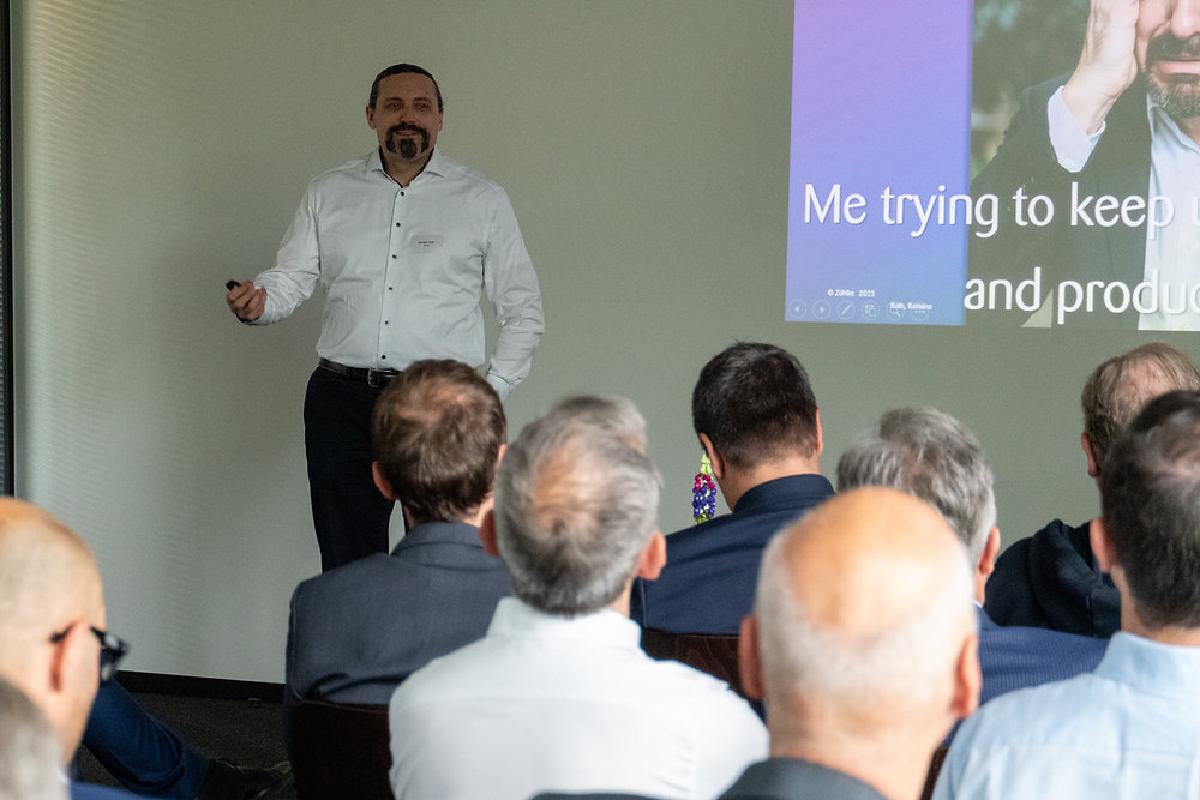
Keynote at the CTO Forum of the Rudolf-Diesel-Medaille. Hosted by Zühlke, Munich


We Are Living in the AI Hype Era#
AI is dominating headlines. From natural language interfaces to automated code generation, the pace of development is relentless. But alongside this excitement, we are seeing inflated promises, rushed implementations, and disappointing returns.
In 2025 alone, global investment in AI is projected to exceed one trillion dollars. Yet, estimated revenues are only a fraction of that. Around 120 billion. This gap is filled with assumptions about future efficiency gains that are far from guaranteed.
The pattern is familiar. Like the dot-com bubble of 2000, many organizations today are jumping on the AI bandwagon without clear strategy or value. The result is an emerging bubble. One we must acknowledge before it bursts.
AI Alone Is Not the Answer#
AI is a powerful tool. But it cannot fix broken processes, outdated technology stacks, misaligned governance, or disjointed organizations.
Transformation does not come from AI in isolation. It comes from cybernetic thinking, building adaptive systems where process, organization, technology, governance, and AI work together in continuous feedback loops to deliver value.
This is the foundation of the cybernetic enterprise.
What Is a Cybernetic Enterprise?#
A cybernetic enterprise is a self-regulating, continuously evolving system. It learns through feedback, adapts to change, and aligns all components, technical and organizational, toward business outcomes.
It is characterized by:
- Integrated feedback across all dimensions
- Platform-based delivery to reduce friction and increase standardization
- AI used as a capability, embedded where it delivers clear value
- Autonomous teams enabled to build and run their own products
This model moves us from fragmented development to enterprise-wide orchestration.
From Custom Software to Industrialized Delivery#
Most companies today still develop software in isolated environments, internal teams, external vendors, hybrid models, resulting in complexity, inconsistency, and inefficiency.
We are now entering the age of industrialized software delivery. Just as manufacturing evolved through standardization, software and AI delivery must follow suit.
- Standardizing services, infrastructure, and tooling
- Reducing cognitive load on product teams
- Automating compliance, security, and observability
- Creating common development environments that accelerate delivery
This shift is already underway. Leading organizations are investing in cybernetic platforms as the backbone of this transformation.
The Cybernetic Platform: Enabling Scalable, Adaptive Teams#
At the heart of the cybernetic enterprise is the cybernetic platform, a floating, self-service platform that provides the capabilities, tools, and infrastructure needed to build modern digital and cyber-physical products.
- A unified developer portal (e.g., Backstage or custom-built)
- Automated provisioning and deployment layers
- Standardized integration of tools through the platform, not between them
- Built-in capabilities for observability, security, and lifecycle management
- AI delivered as a service, not as a separate silo
This platform is not a central bottleneck. It is a product in itself, maintained by a dedicated team, and built to support autonomous product teams across the organization.
Real-World Implementation at Zühlke#
At Zühlke, we have built our own cybernetic delivery platform to support both internal projects and client engagements. It accelerates delivery, improves consistency, and serves as a blueprint for enterprise transformation.
- Standardize digital product delivery across diverse industries
- Support clients who lack internal platform capabilities
- Enable reuse of proven components and services
- Deliver AI tools and infrastructure in a consistent, governed way
It is the foundation of how we help clients move from complexity to clarity.
A Call to Action for CTOs and Digital Leaders#
CTOs and technology leaders must now move beyond hype and focus on creating sustainable, scalable, value-driven foundations.
- Using AI strategically, not reactively
- Building internal platforms that empower teams
- Standardizing delivery to enable speed and scale
- Creating feedback-driven systems that adapt continuously
The cybernetic enterprise is not a theory. It is an operating model that is already delivering results in the real world.
Conclusion: The Future is Cybernetic#
We are entering a new era of enterprise design. One that integrates AI, governance, organization, process, and technology into a coherent, adaptive system.
The future will not be defined by AI alone, but by those who understand how to orchestrate its role within a larger system. The cybernetic enterprise is that system.
Now is the time to move from experimentation to execution.