Summary#
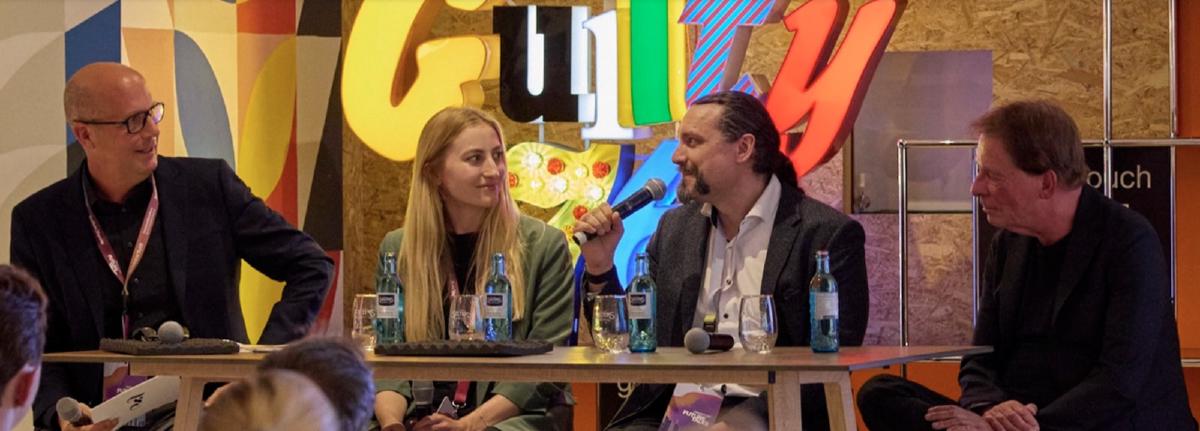
At the 10th edition of the FRANKFURT FUTURE TALKS, a partner event by Wirtschaftsinitiative, F.A.Z. and Momentum held at Massif Central, Dr. Sarah Jourdan (Genow.ai), Romano Roth (Zühlke) and Prof. Dr. Peter Buxmann (TU Darmstadt) discussed Agentic AI. Moderated by Daniel Schleidt (F.A.Z.), the panel asked: Where does the hype begin, what is reality, and how is value created?
My Quotes#
On the hype and where the investments actually go:
“Huge sums are being invested. But 90 percent of the investments go into tools and licenses, only ten percent into people. Advantage does not come from ever more agents, but from the right architecture and the targeted orchestration of intelligence. You have to rethink the processes and the organization.”
On costs and the hard-to-predict pricing of the model providers:
“There will be business cases that no longer add up in the future.”
On whether AI puts jobs at risk:
“During Corona a lot of hiring happened, now we are seeing a correction. The efficiency gains from AI sometimes have to serve as the justification, even though there has been no large-scale job cutting because of AI yet.”
“But AI will support people, not replace them.”
On productivity gains and the organization of the future:
“We are still operating in functional organizations, in silos. In the future we will see value-stream-oriented organizations supported by agents. The AI does the work, the human decides. The models are the infrastructure. How we use them, that is where the ‘magic’ lies.”
On the cultural shift:
“We have to go through unlearning and relearning. That is a genuine cultural change.”
Read the full article at Wirtschaftsinitiative
Photo: Kirsten Bucher / Wirtschaftsinitiative FrankfurtRheinMain