To stay competitive, companies need a radical upgrade. The Cybernetic Enterprise transforms organizations into learning systems that adapt faster than their market changes.
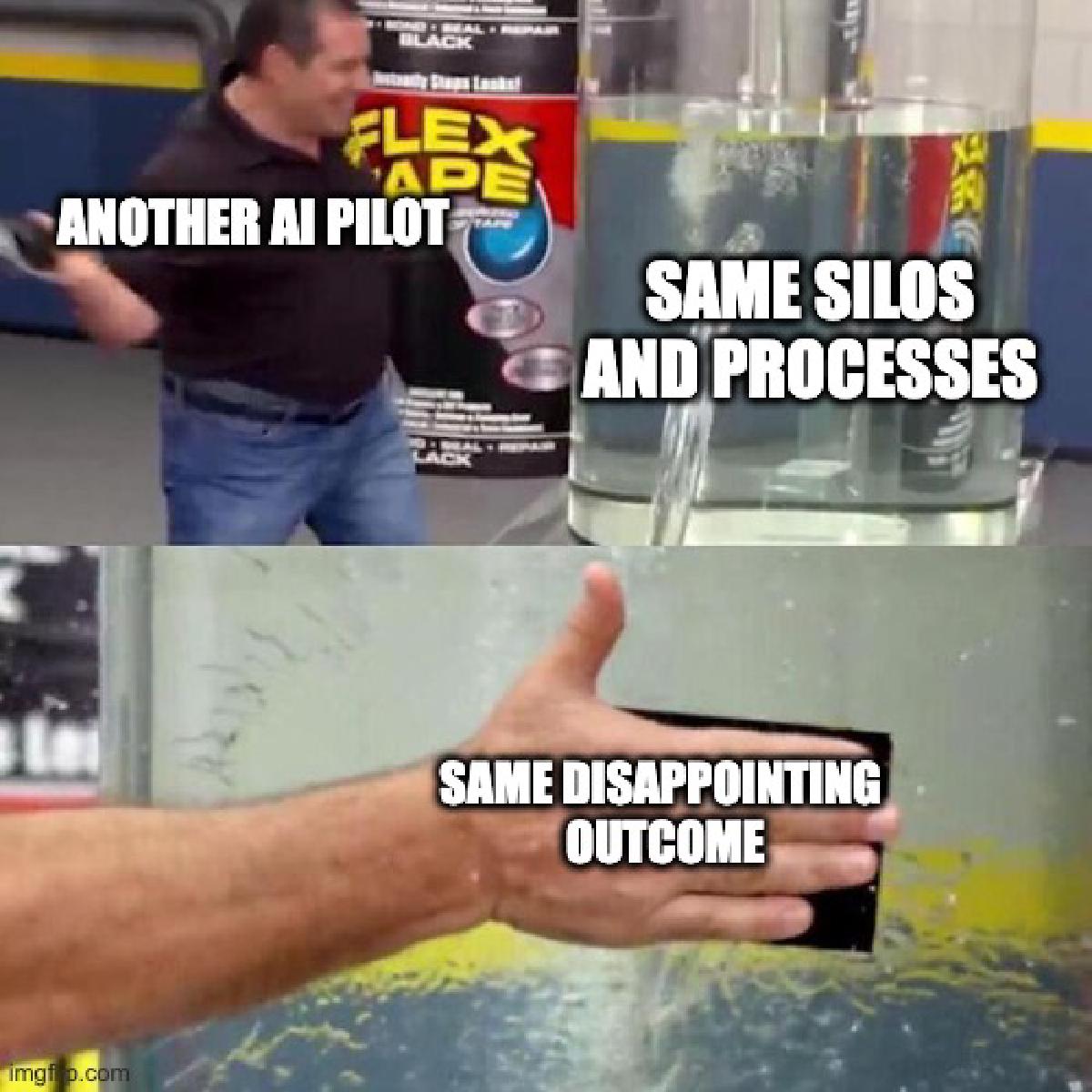
Digital transformation and agility were long considered promises of the future. Today, the reality is clear: they are no longer enough. Many companies believe they can secure their competitiveness with a bit of agility and a few quick AI pilot projects. But anyone who merely grafts artificial intelligence onto outdated structures will fail. What is needed is a radical upgrade of the operating model.
Scrum meetings, colorful Kanban boards, and flashy innovation labs create the feeling of agility. At the same time, companies are investing heavily in AI, hoping for quick efficiency gains. Disillusionment often follows promptly: the expected ROI fails to materialize. AI does not heal dysfunctional organizations, fix broken processes, or replace clear strategic direction. Anyone who believes a language model can reinvent a business model without fundamental change underestimates the challenge.
The real problem runs deeper: the organizational “operating system” of many companies is outdated. Instead of building a new one, they keep optimizing the old. After two decades of digitalization, many are more efficient, but only in isolated pockets, within silos and disconnected processes. This “more of the same” acts like a painkiller: symptoms are relieved, but root causes persist. In the era of AI, this is fatal. Agility limited to individual teams or innovation projects falls short when systemic adaptability is required.
Cybernetic Enterprise: the Operating Model of Tomorrow#
What is needed is a fundamental rethink: the Cybernetic Enterprise is both an operating model and a mindset. The term derives from the Greek “kybernetes” (helmsman) and describes organizations as dynamic systems capable of learning and self-regulation through feedback loops. Organization, processes, and technology work as an intelligent whole, comparable to a nervous system that continuously processes information and translates it into action.
A Cybernetic Enterprise is not optimized for short-term efficiency but for long-term adaptability, resilience, and sustainable value creation. Decisions are systematically based on data, teams act decentrally along shared principles, and the technology platform enables continuous evolution. AI is no longer an isolated tool but an integral part of the organizational DNA.
What matters most is the vertical alignment of all layers: from purpose and strategy through values and processes to tools and technologies. This layered mental model creates coherence, a fundamental prerequisite for achieving real impact with AI. Without clarity in data, decisions, and collaboration, every AI initiative remains patchwork.
The goal is clear: an organization that learns faster than its market changes and thereby remains viable in the long term.
Three Core Principles#
1. Organization Along the Value Stream#
Instead of functional silos, the end-to-end value stream takes center stage. Value stream mapping reveals bottlenecks and enables seamless automation. AI can handle routine decisions while humans focus on complex cases. Customer centricity and continuous user feedback shorten learning cycles and reduce risk.
2. Empowered Teams Instead of Hierarchy#
Decisions are made where the knowledge resides. Teams carry end-to-end responsibility and operate within clear guardrails. Leadership provides context instead of control. This requires new competencies, from systems thinking and data literacy to ethical responsibility in dealing with AI.
3. Data-Driven Decisions and Continuous Learning#
Data and feedback replace gut feeling and rigid annual plans. “Telemetry everywhere” makes organizations capable of acting early. Success is no longer measured by output but by flow and outcome metrics. Continuous experiments, short feedback loops, and “safe to fail” approaches turn the company into a learning system.
From Theory to Practice#
An internal platform as the technical backbone provides infrastructure, data, automation, and AI services in a standardized way, including integrated governance. Continuous improvement becomes the new normal. And above all: transformation is a leadership mandate. The CEO acts as Chief Evangelist, communicating purpose and urgency, removing obstacles, and visibly embodying the change.
Conclusion#
The path to a Cybernetic Enterprise is not an overnight revolution but a consistent evolution. Yet it must begin now. “Business as usual, just with AI” is not enough. Digitalization was yesterday. Today, it is about cybernetic transformation: the company as a living, learning system in which humans and machines work together intelligently. Those who holistically orchestrate organization, technology, and processes will not just survive the AI wave, they will shape it.