By Pia Wiedermayer and Romano Roth
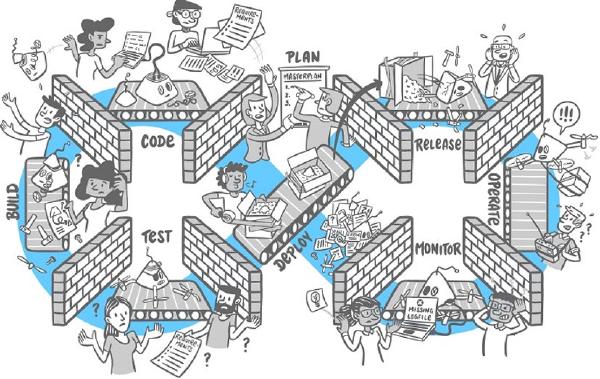
In many organizations and projects, software development involves numerous employees and machines performing tasks separately. This approach results in problems. Here’s how going back to the original way of developing software and building an organic digital factory can help.
How do you make sure your organization is not overloaded with too many projects, too many ideas, and too little focus? And how do you ensure you are building the right thing? This is exactly what epics are for. In this video, I walk through the concept of epics, show you a concrete example, and explain why epics are far more effective than traditional projects.
In my previous video, we explored what a backlog is. We learned that a backlog consists of Product Backlog Items, short PBI. In this video, we go one level deeper and look at what exactly a PBI is, how it evolves over time, and how it relates to the product backlog, the sprint backlog, and the product owner.
What is a backlog, and why is backlog management so important in agile software development? In this video, I break down the concept of a backlog, explain the difference between a product backlog and a sprint backlog, and show how tools like Jira support backlog management in practice.
As a leading innovation company with 1600 employees in Germany, United Kingdom, Austria, Serbia, Bulgaria, Singapore, Hong Kong, Portugal, Switzerland and Vietnam, Zühlke has always some ongoing and planned strategic initiatives.
One size fits all? Nothing of the sort! Participatory budgeting calls for a tailored solution, one that can constantly evolve and adapt to the given situation. In this article, we describe how we do it at Zühlke.
The SAFe® for DevOps training is an assessment or a workshop that is ideally suited for teams. Why? Because the focus is on driving the value stream of these teams. Addressing questions, challenges, and any potential obstacles - we can work on the training to provide value to them. We will give them the theory input of what exactly DevOps is.
Together with my colleague Nadine, I presented an updated version of our participatory budgeting approach. We had already shared the first version at a previous event, but since then we made significant changes that we wanted to share. A quick disclaimer: we did not invent participatory budgeting. We built on the materials from the SAFe (Scaled Agile Framework), so you will find the copyright on the relevant slides. If you want to introduce participatory budgeting in your own organization, we are happy to share our experience and always reference the original SAFe materials.
Many organizations still rely on annual planning cycles with large upfront budgets, waterfall-style gate reviews, and business cases that are written solely to secure funding. The result is often a massive overload of initiatives, poor quality, delayed projects, and a fundamental disconnect between output and actual business impact. In this talk, my colleague and I share how we introduced Lean Portfolio Management at Zühlke Engineering, what we achieved in our first MVP after six months, and where we plan to go next.
How can strategy be translated into execution in a transparent, lean, and scalable way?
What This Talk Covers # In this session, we share how Zühlke introduced Lean Portfolio Management (LPM) based on SAFe and adapted it to the organizational context. We show how we built an MVP for LPM by combining a portfolio kanban, transparent epic and roadmap management, and group-wide OKRs to improve strategic alignment and decision-making.
Is DevOps really the reason why testing and quality assurance (QA) employees are being increasingly automated out of a job? Pia Wiedermayer, Head of QA, and Romano Roth, Head of DevOps, discuss different ways to incorporate the wealth of experience of testing and QA specialists into the agile team culture.
In this video, I explain what Synthesize is and how it works within the SAFe DevOps Health Radar. Synthesize is the fourth and final step of Continuous Exploration, where we combine the outputs of Hypothesize, Collaborate and Research, and Architect into a prioritized backlog with a clear vision and roadmap.