We have spent a lot of this podcast on the technology and on the effects of AI. In episode 7 of Prompt & Proper, Steffen Ochsenreither from Swiss Post and I take on the transformation itself. Not what AI does inside a company, but how you point a company at AI. The episode is in German, and this post captures the core of the conversation.
As Chief AI Officer I am supposed to put an AI strategy in place, and the headline alone turns into work. AI-First, AI-Native, AI-Enabled, AI-Ready, AI-Shaped, AI-Augmented. In episode 6 of Prompt & Proper, Steffen Ochsenreither from Swiss Post and I go through the terms and end up somewhere the question does not suggest. The episode is in German, and this post captures the core of the conversation.
Welcome to Edition 8 of The CAIO.
One question ran under almost every post this month. When a model writes the code and anyone in the company can start it, what is left that a person has to own? The two posts that reached furthest answered it from opposite ends. One showed a company where people with no engineering title ship to production. The other showed an engineering organisation where execution got so cheap that deciding became the constraint. Put them together and the control you thought you had, knowing who wrote it, is gone.
A proof of concept is quick to build these days, and that is exactly where the problem starts. Classically around 70 percent of all PoCs got stuck in the PoC stage. With AI, going by the studies Steffen follows, the rate sits beyond 90 percent.
The CEOs of the big AI companies never tire of claiming that AI will wipe out up to 40 percent of all jobs. The headline works. School leavers ask Steffen whether a tech degree is still worth starting, and a German university has gone as far as advising against studying computer science.
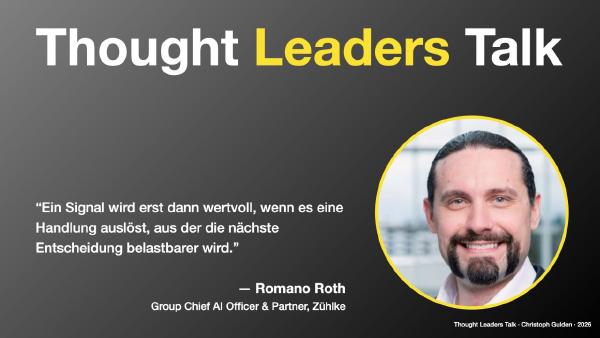
Christoph Gulden invited me onto his Thought Leaders Talk. Christoph reviews investment decisions for a living, I guide companies through technology waves. What came out of it is an argument about the 90 percent of AI pilots that never reach production, and what that means for the next investment decision. At one point Christoph contradicts me openly, and he is right to. The dialogue below is the one we worked out together. The original appeared in German on LinkedIn; this is my English version.
There is a pattern to how enterprise architecture fails. The models get more detailed, the governance gets heavier, and the people who make the real decisions stop showing up. The architecture is correct and nobody uses it.
When people talk about AI and jobs, they almost always mean developers. The larger part of the working world sits elsewhere, in offices, in HR, in marketing, in administration.
In episode 3 of Prompt & Proper, Steffen Ochsenreither from Swiss Post and I look exactly there. And we quickly land on a point that has nothing to do with technology. The episode is in German, and this post captures the core of the conversation.
On LinkedIn I keep reading that agentic coding makes teams 10x more productive. It is good marketing. It has little to do with what we measure in real projects.
In episode 2 of Prompt & Proper, Steffen Ochsenreither from Swiss Post and I take that number apart. And we talk about the other side of the same coin, the one that gets far less airtime: what tokens actually cost, and how solid the economics behind them really are. The episode is in German, and this post captures the core of the conversation.
Most AI projects do not fail on the technology. They fail earlier, on a thinking error: the hunt for one giant use case, the lighthouse project.
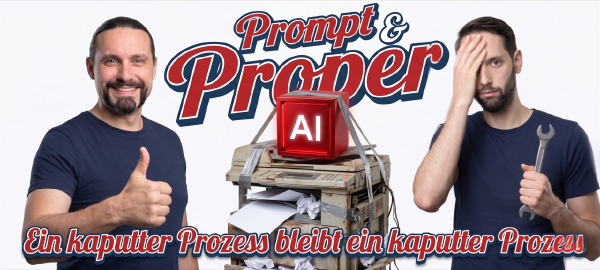
This is the launch of my new podcast Prompt & Proper, which I host together with Steffen Ochsenreither from Swiss Post. Every two weeks, in German, hands-on and without the marketing speak. Episode 1 takes apart what we call the “giant use-case fallacy”: why the management signal “we are doing AI now” so often ends in nothing, and what a good first use case actually needs. The episode is in German, and this post captures the core of the conversation.
Welcome to Edition 7 of The CAIO.
I have argued for years that the model is the small part and the discipline around it is the work. It is a claim that is easy to nod along to and easy to dismiss as a consultant’s line. In July it stopped being a line. A research group tested it on 5,000 codebases and put a number on it. A systems engineer took apart a viral “37,000 lines a day” boast and showed what that volume actually costs. Both posts reached far beyond my usual audience, one of them among the highest reach I have had all year. The audience is not tired of the argument. It wants the evidence.
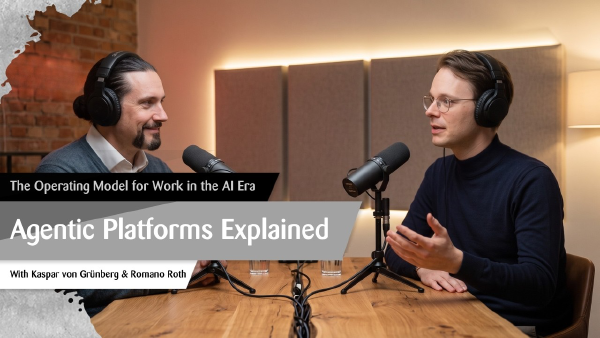
Everybody is suddenly saying “agentic platform.” Almost nobody can define one. That is exactly what we set out to fix.
I invited Kaspar von Grünberg onto the channel. He has spent years shaping platforms, put the internal developer platform, the IDP, on the map with Humanitec, and built PlatformCon into the largest platform engineering community. He is now building Canyon, a control plane for enterprise AI, and his book Thinking in Platforms is on the way. By the end of this conversation you will know what an agentic platform actually is, why it matters, what it takes to build one, and how to start.