2026 will be the year when the wheat is separated from the chaff in AI: it’s not the better model that makes the difference, but the ability to deliver impact under real-world conditions. What decision-makers need to know and do now so that AI evolves from experiment to true partner.
Welcome to the first edition of The Cybernetic CxO. A monthly newsletter for CTOs, CIOs, and digital transformation leaders navigating the AI era.
Each month, I’ll share patterns I’m seeing in the field: what’s working, what’s breaking, and what it means for how we build and run technology organizations. Expect honest takes, practical frameworks, and one thing you can do this week.
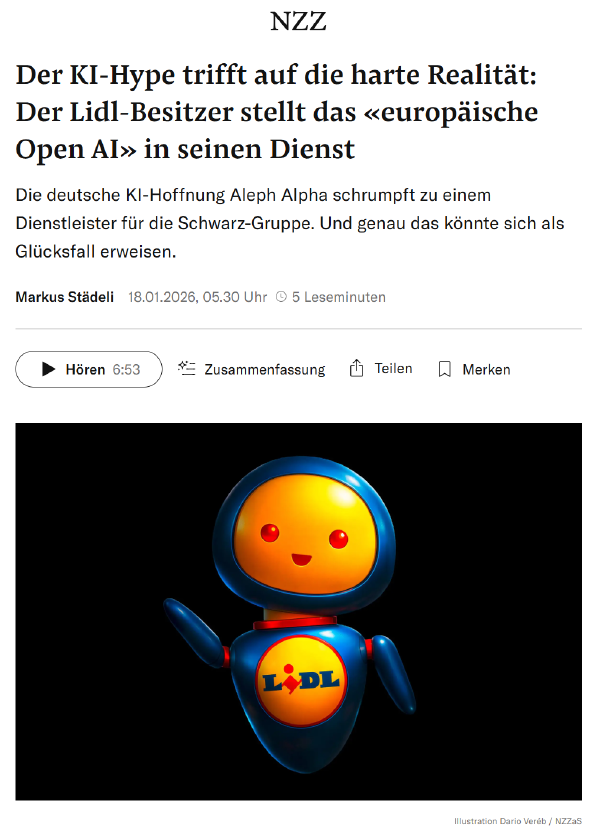
Summary # The NZZ article examines how Aleph Alpha, once celebrated as “Europe’s OpenAI,” is pivoting from developing its own large language model to becoming a service provider for the Schwarz Group (owner of Lidl). While some see this as a setback, experts view it as a strategic opportunity: building sovereign European cloud infrastructure may have far more potential than competing in the AI model race dominated by US and Chinese companies.
Artificial intelligence (AI) is everywhere. Yet lasting business value often remains elusive. Too many companies still see AI as a tool or quick fix, rather than what it can be: a strategic partner for continuous learning and adaptation. To achieve competitive advantages in a dynamic, data-driven world, organizations must fundamentally restructure themselves as a Cybernetic Enterprise, where AI is firmly anchored as a feedback and learning amplifier. Instead of viewing AI in isolation or as an add-on, it should become an integral part of the organizational operating system. Only when AI transforms data, processes, and customer interactions into actionable learning does a useful tool become a true gamechanger, one that makes companies more agile, capable of learning, and future-oriented.
Understand why most digital transformations fail, and you’ll figure out what tomorrow’s leading businesses will all have in common. Here’s how Cybernetics solves AI challenges at scale.
Discover the people, processes and technology you’ll need to mitigate setbacks on your transformation journey, and unlock AI-augmented ROI that compounds as it scales.
Most companies that work in an agile way today while simultaneously trying to implement AI will not survive the next decade, in my opinion. The reason: their operating system is too old. The future is not agile. The future is not AI either. The future is cybernetic.
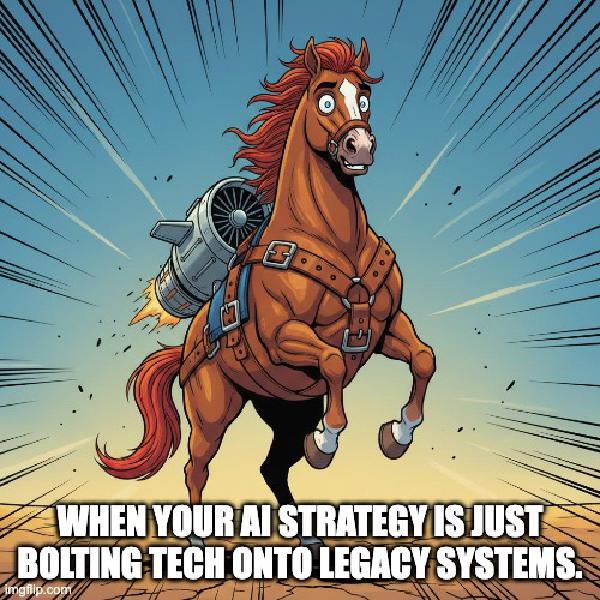
Digital and agile was yesterday # Many companies believe they can secure their future with a dash of agility and rapid AI pilot projects. But those who simply “graft” artificial intelligence onto outdated structures will fail. A radical upgrade of the operating model is needed.
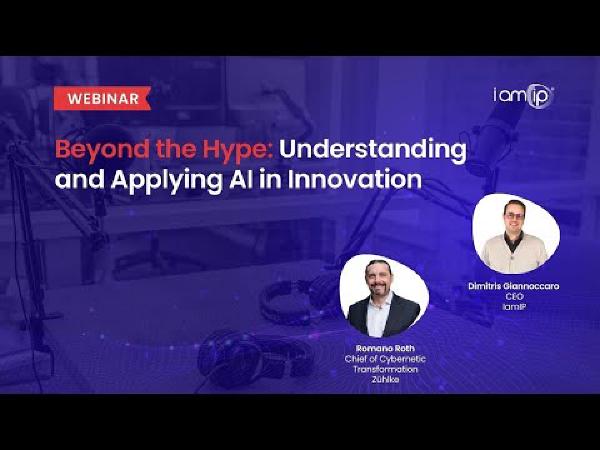
Does AI really solve the problems we have? What does it mean for innovation and intellectual property? Will AI replace patent analysts? In this webinar with IamIP, I cut through the fog of AI hype and share a practical framework for understanding where AI genuinely adds value, and where it falls short.
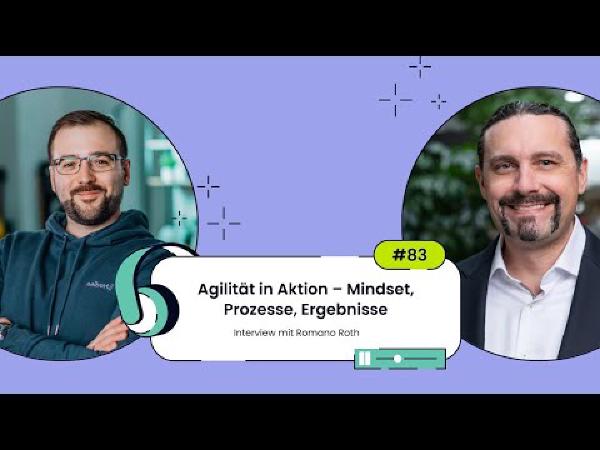
How much agility can software development really handle, and where does agility tip into chaos? In this episode of the “Modern Work 2 Go” podcast (in German), I speak with Florian Schneider about exactly these questions. We dive deep into a concrete real-world example: an agile transformation at a Swiss bank that I accompanied over eight years. The conversation covers the shift from waterfall to agility, scaling with SAFe, building value streams, and why continuous improvement is the central pillar of every transformation.
The Cybernetic Enterprise: How to Build a Future-Ready Organization is your comprehensive operating system for navigating the next era of business transformation.
Welcome to the Leanpub Launch video for The Cybernetic Enterprise Course: How to Build a Future-Ready Organization by Romano Roth
Summary # The NZZ article examines “Workslop” - a new term for sloppy work produced through careless AI use. While tech companies promote AI as a productivity miracle, the reality shows a darker side: AI makes it easy to produce polished-looking but often substanceless or incorrect content. This creates extra work for colleagues who must clean up the mess, damages trust in teams, and ultimately destroys the productivity AI was supposed to improve.