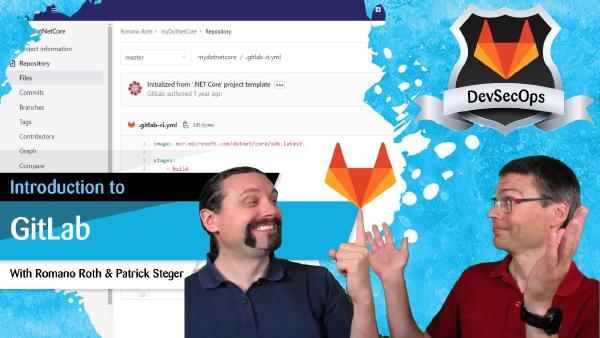
Before we can shift any security checks left, we need a project, a repository, and a pipeline that actually builds something. In Part 2 of our GitLab DevSecOps series, Patrick Steger and I log into GitLab, create a new .NET Core project from a template, and look at the .gitlab-ci.yml file that GitLab generates for us — including the build and test jobs that will become the foundation for everything we add later.
Why does security still get bolted on at the end of the development process, and how do we move it earlier without slowing teams down? In Part 1 of our GitLab DevSecOps series, Patrick Steger and I set the stage: what GitLab is, what shifting security left really means, and which CI/CD concepts you have to understand before you can build a DevSecOps pipeline that actually works.
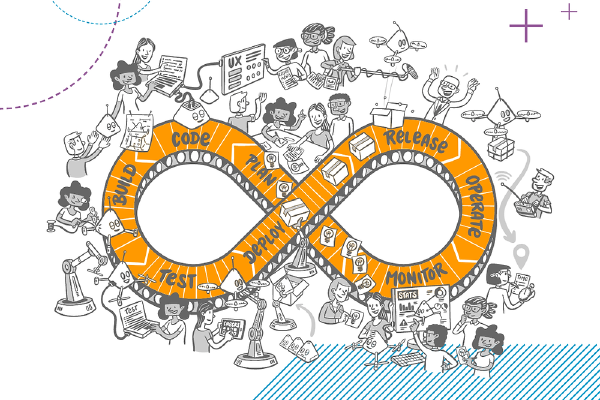
Have you ever wondered what “DevOps Engineers” actually do? What does “DevOps” even mean actually? This blog post aims to explain the concept of DevOps and the value that it
Feature toggles are one of those concepts that sound simple on the surface but unlock enormous power in practice. In this DevOps Meetup Zurich session, I team up with Ben Rometsch, founder of Flagsmith, to explain the what, why, and how of feature toggles. We cover the foundational concepts of CI/CD that make feature toggles necessary, the difference between deployment and release, and how modern feature flagging platforms enable progressive rollouts, user segmentation, and A/B testing.
Continuous Deployment is the final, most aggressive step in the CI/CD progression. CI proves the code builds and the unit tests pass. Continuous Delivery proves the artifact works in a production-like environment. Continuous Deployment removes the last manual checkpoint: if every test along the way is green, the change goes straight to production. No “deploy” button, no Friday-afternoon release window, no human in the loop for the final step.
Continuous Integration ends with a tested artifact. That sounds great, but a green build does not mean the software actually works in a realistic environment. Unit tests run in isolation. Integration tests run against mocks. Until you put the software somewhere that looks like production and exercise it under real conditions, you have not really proven anything. Continuous Delivery is the step that closes that gap.
In traditional software development, software is merged and tested by all developers in one big single integration step that usually takes weeks or even months. Since this only happens every few months, this step is very time-consuming.
In traditional software development, integration was a single, painful event. Every developer worked in isolation for weeks or months, and at the end the team merged everything in one big bang. The integration step took weeks, sometimes months. Conflicts piled up, bugs hid in the seams between modules, and nobody could say with confidence whether the system actually worked. Continuous Integration was invented to make that pain disappear.