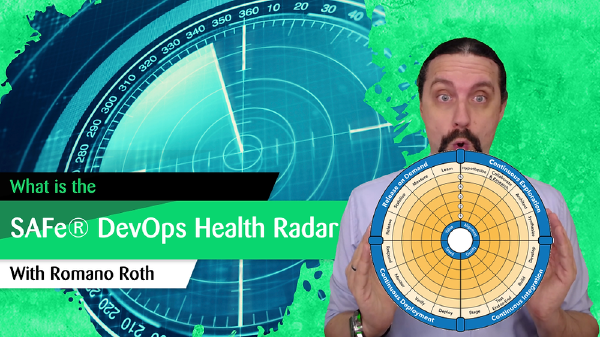
In this article, we will explore what exactly SAFe® DevOps is for health radar and what can you use it for.
Stage is the step in the SAFe for DevOps Health Radar where we perform the final validation before going to production. In the staging environment, we run user acceptance tests, conduct system demos for our stakeholders, and verify that everything is truly production-ready. In this video, I walk through what the Stage step involves and why it is essential for a reliable delivery pipeline.
In the SAFe DevOps Health Radar, Develop is where we take the features from continuous exploration and turn them into working code. We split features into user stories, implement them with a strong focus on built-in quality, and commit everything to version control. In this video, I walk through the Develop step and explain why quality practices like TDD and BDD are so important.
In this article, I explain what Continuous Exploration is within the SAFe DevOps Health Radar and why it is essential for building the right thing in the right way. Please note that everything discussed here is under the license of Scaled Agile, and that the Scaled Agile Framework is a framework to be used as a toolbox. Take out of this toolbox what fits your needs and what solves your problems.
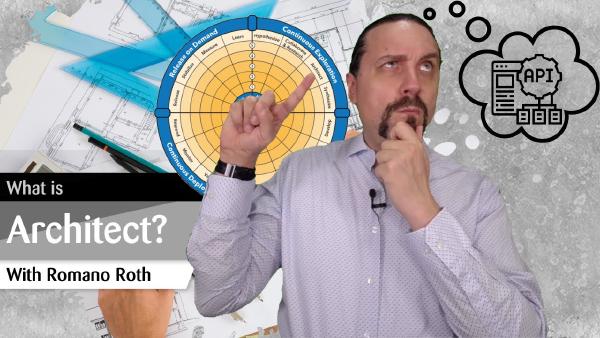
Architect is the third step in the SAFe DevOps Health Radar, part of Continuous Exploration. In this video, I explain how we define the minimal architecture needed to prove a hypothesis and enable continuous delivery of value to customers.
In this video, I take a deep dive into Hypothesize, the first process step of the SAFe DevOps Health Radar and the continuous delivery pipeline. The core question is simple: how do you know you are building the right thing?
In this video, I explain what the SAFe for DevOps training is all about. Unlike traditional classroom courses, this training is a hands-on workshop where real teams work on their own value streams and leave with a concrete, prioritized action plan.
What will move the needle in DevOps in 2021? After a year that forced almost every organisation to accelerate digital delivery, the trends I see for 2021 are less about shiny new tools and more about discipline: making DevOps stick at scale, shifting security left, getting serious about continuous delivery, leaning further into the cloud, and watching the early signals from AIOps.
The first way to introduce DevOps is to optimise the value flow from development, through operations, all the way to the customer. This is the First Way in Gene Kim’s Three Ways framework — and it is where every transformation should start.
Continuous Integration ends with a tested artifact. That sounds great, but a green build does not mean the software actually works in a realistic environment. Unit tests run in isolation. Integration tests run against mocks. Until you put the software somewhere that looks like production and exercise it under real conditions, you have not really proven anything. Continuous Delivery is the step that closes that gap.
Companies today are confronted with the challenge of enhancing efficiency while lowering costs. Changes to products often take much too long to reach end customers on the market. A consistent DevOps approach can aid this process.
The coronavirus crisis is demonstrating how companies with an agile DevOps mindset can better respond to new circumstances and challenges than companies with rigid structures and processes.
By Romano Roth and Romeo Weber