In my two decades of experience leading DevOps, Digital, and Agile transformations, I’ve observed that the path to modernisation is rarely a straight line. Organisations, particularly those in data-sensitive sectors, like banking, government, and healthcare, often find themselves at a crossroads. They need to innovate faster while maintaining rigorous security and reliability. This tension between speed and safety has traditionally forced companies to choose one over the other. But it doesn’t have to be this way.
Flagsmith’s eBook on feature flags at enterprise scale. I wrote the introduction.
The argument in it: feature flags separate deployment from release, and that separation is what makes deployment frequency, one of the four DORA metrics, movable at all. Without it, a team can only deploy as often as it dares to release. With it, small changes go out several times a day and the blast radius of each one stays small.
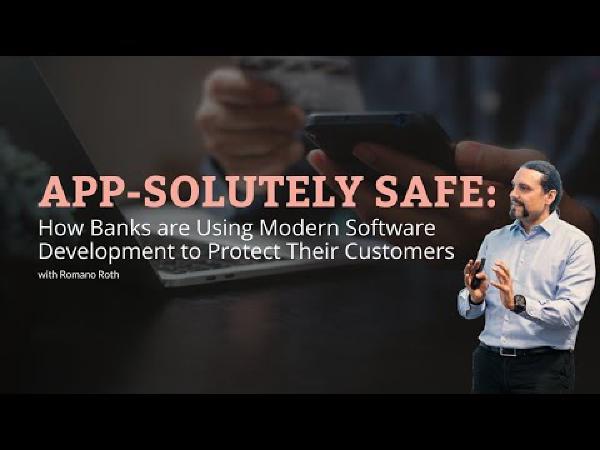
Banking software must be secure, reliable, and trustworthy. But many banks still rely on traditional development methods that are slow, risky, and inefficient. In this video, I explore three modern software development practices that are fundamentally changing how banks build and deliver software: continuous deployment, test-driven development, and feature flags.
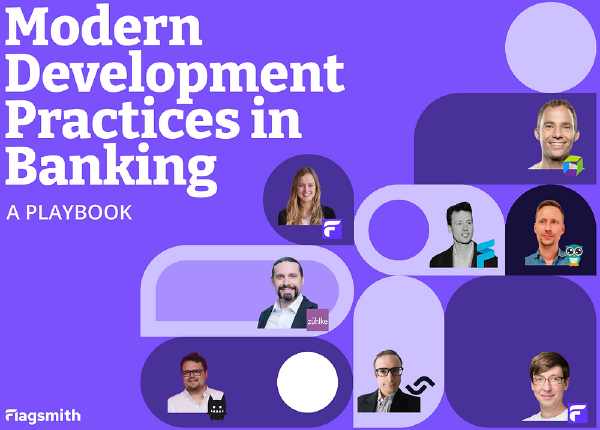
Intdiuction the the eBook Moving to Modern Development Practices in Banking: A Playbook
By Anna Redbond and Romano Roth on August 2, 2023
A lot of banks are moving to modern software development despite the traditional industry hurdles like compliance, regulations, and legacy architecture. The shared goal: becoming more adaptable to meet customers’ changing demands.
After we finished the GitLab DevSecOps series, Patrick changed jobs — and his new team is on GitHub. The problem is the same: no security checks during development. The platform is different. In Part 1 of our GitHub DevSecOps series, we cover what GitHub is, the CI/CD vocabulary you have to share before any pipeline conversation works, and the shape of the DevSecOps pipeline we will build over the next sessions.
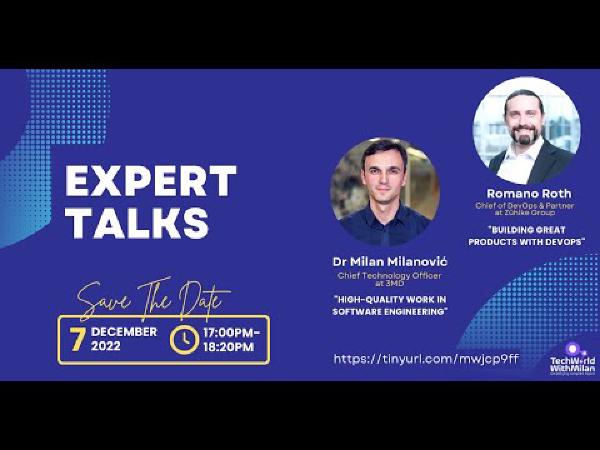
What defines high-quality work in software engineering? Is it Scrum? Clean Code? TDD? Functional programming? In this Expert Talks session, my colleague Milan and I present two complementary perspectives. Milan covers the pillars of high-quality engineering work, from team building and customer centricity to clean code and engineering culture. I then show how DevOps and continuous delivery help build great products by moving from a project mindset to a product mindset.
Why does security still get bolted on at the end of the development process, and how do we move it earlier without slowing teams down? In Part 1 of our GitLab DevSecOps series, Patrick Steger and I set the stage: what GitLab is, what shifting security left really means, and which CI/CD concepts you have to understand before you can build a DevSecOps pipeline that actually works.
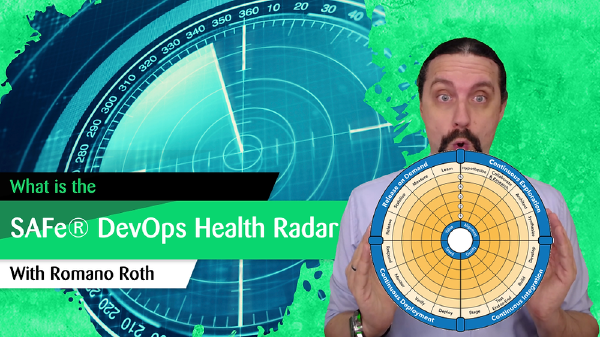
Over the past few years I have published a deep-dive on every single activity in the SAFe DevOps Health Radar. This post is the round-the-radar tour: a single page that walks you through all four aspects and all sixteen stages, with the original video for each and a link to the full article. Use it as a map — to find your starting point, to share with your team, or to assess where you are today and where you want to go next.
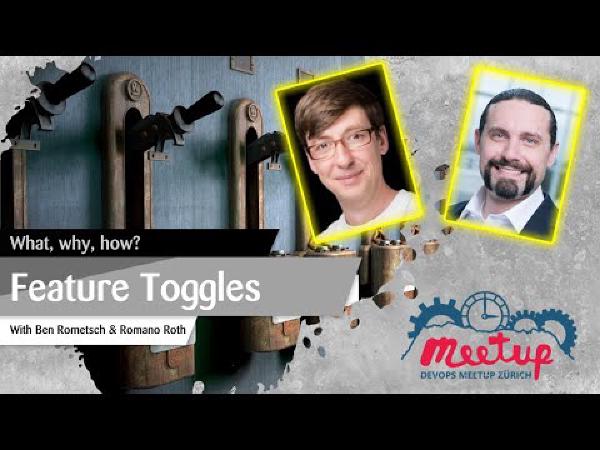
Feature toggles are one of those concepts that sound simple on the surface but unlock enormous power in practice. In this DevOps Meetup Zurich session, I team up with Ben Rometsch, founder of Flagsmith, to explain the what, why, and how of feature toggles. We cover the foundational concepts of CI/CD that make feature toggles necessary, the difference between deployment and release, and how modern feature flagging platforms enable progressive rollouts, user segmentation, and A/B testing.
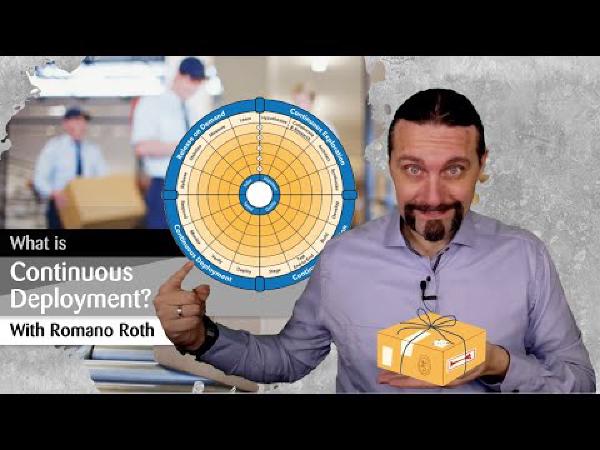
In this article, I explain what Continuous Deployment is within the SAFe® DevOps Health Radar and why it is essential for delivering value quickly and safely. Please note that everything discussed here is under the license of Scaled Agile, and that the Scaled Agile Framework is a framework to be used as a toolbox. Take out of this toolbox what fits your needs and what solves your problems.
Verify is a critical step in the SAFe for DevOps Health Radar. After deploying our package into the production environment, we need to confirm that the new functionality works correctly and does not negatively affect the integrity or robustness of the existing system. Only after this verification is complete can we confidently release the new features to end-users. In this video, I walk through what the Verify step involves and how it fits into the overall continuous delivery pipeline.