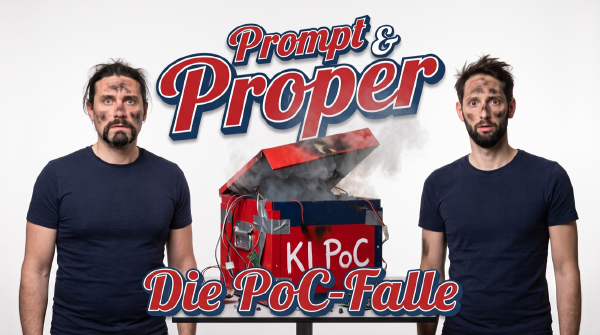
A proof of concept is quick to build these days, and that is exactly where the problem starts. Classically around 70 percent of all PoCs got stuck in the PoC stage. With AI, going by the studies Steffen follows, the rate sits beyond 90 percent.
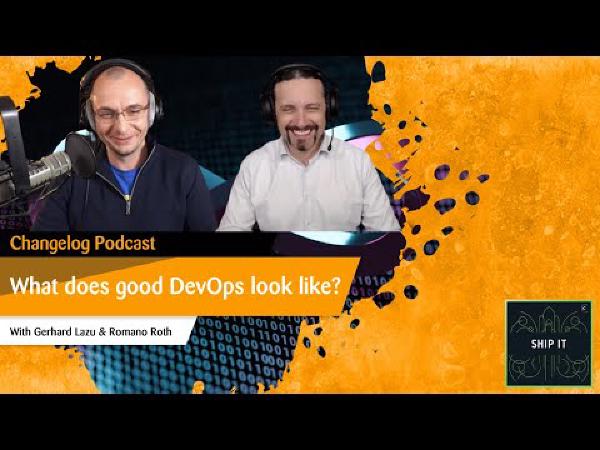
In this episode of the Ship It podcast, Gerhard Lazu and I have a deep conversation about what good DevOps looks like in practice. We talk about the real challenges companies face during transformations, how to deal with middle management resistance, technology choices, and where the industry is heading with AIOps and hyper automation.
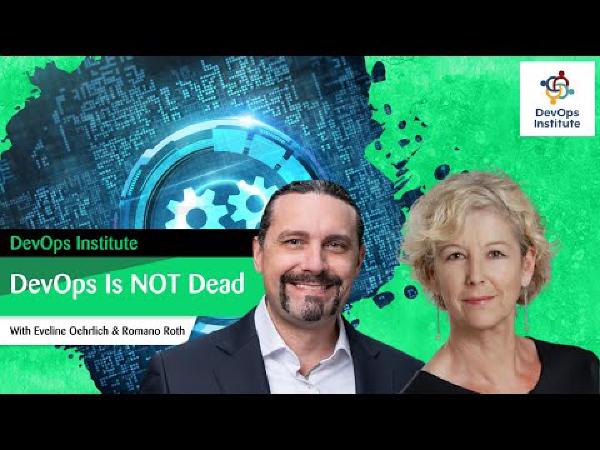
I joined Eveline Oehrlich, Chief Research Officer at the DevOps Institute, on the Humans of DevOps podcast for a conversation about whether DevOps is dead. Spoiler: it is not. But the reality in most companies is that we have not progressed as far as many people think. In this episode, we talk about what a Chief of DevOps actually does, why companies still struggle with walls of confusion, how platform engineering enables scaling, and my prediction about digital factories.
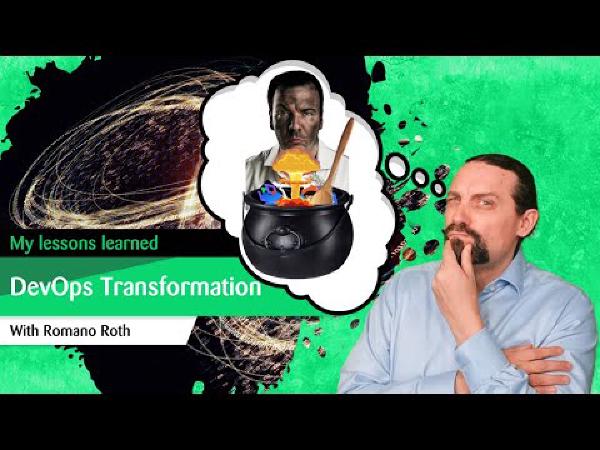
DevOps transformations look simple on paper. Take an existing environment, add the Spotify model, throw in SAFe, sprinkle some Team Topologies, add DevOps and platform engineering, stir well, add as many tools as possible, and stir again. What happens? It crashes. And people say “DevOps is bullshit.”
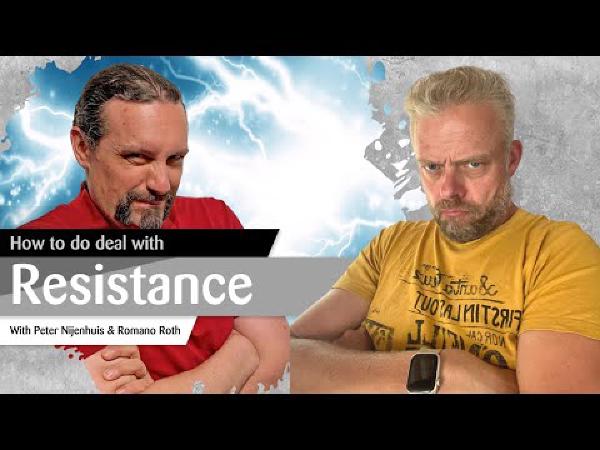
In this podcast episode, I have a conversation with Peyton Einhaus about one of the most challenging aspects of any transformation: dealing with resistance. Whether you are running an agile transformation, a DevOps transformation, or any organizational change, resistance is always present. The question is how you handle it effectively.
I had the honor of being interviewed by 📈 Matt Warcholinski 💾 from Brainhub in his 𝐏𝐨𝐝𝐜𝐚𝐬𝐭🎙️ on 𝐁𝐞𝐭𝐭𝐞𝐫 𝐓𝐞𝐜𝐡 𝐋𝐞𝐚𝐝𝐞𝐫𝐬𝐡𝐢𝐩.
Join Eveline Oehrlich and Romano Roth, to discuss whether DevOps is Dead.
The third way to introduce DevOps is to create a culture of trust that supports experimentation and risk-taking. This is the Third Way in Gene Kim’s Three Ways framework — and it is what puts the team on a learning curve steep enough to outpace the competition.
At first glance, a DevOps transformation seems to be a major undertaking for any company. But with the right approach, you can keep the process lean and agile.
Insight in brief # Start small with a small to medium sized project or product. Select the right people to ensure sufficient credibility and influence. Continuous improvement is key to success.
A DevOps transformation is not magic. Any company can do it. What makes the difference is who you put on the first team — because that team has to deliver the proof that DevOps actually works in your context.
DevOps is one of the most overloaded words in our industry. People use it to mean a tool, a team, a job description, even a vendor product. None of those are right. DevOps is the set of cultural and technical practices that improve the development (Dev) and operation (Ops) of software — together, across the entire life cycle.