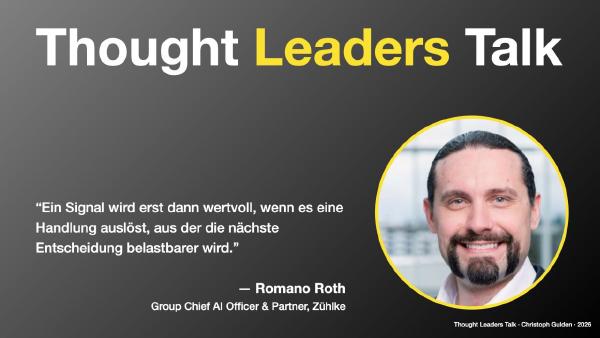
Christoph Gulden invited me onto his Thought Leaders Talk. Christoph reviews investment decisions for a living, I guide companies through technology waves. What came out of it is an argument about the 90 percent of AI pilots that never reach production, and what that means for the next investment decision. At one point Christoph contradicts me openly, and he is right to. The dialogue below is the one we worked out together. The original appeared in German on LinkedIn; this is my English version.
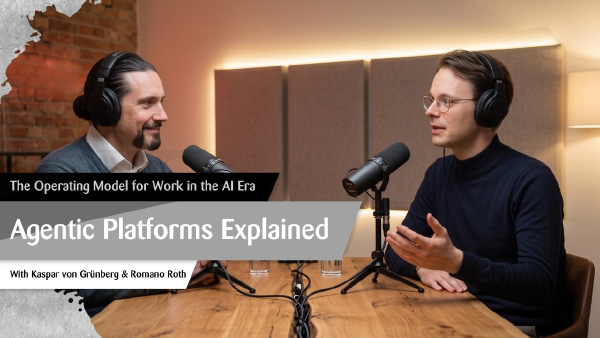
Everybody is suddenly saying “agentic platform.” Almost nobody can define one. That is exactly what we set out to fix.
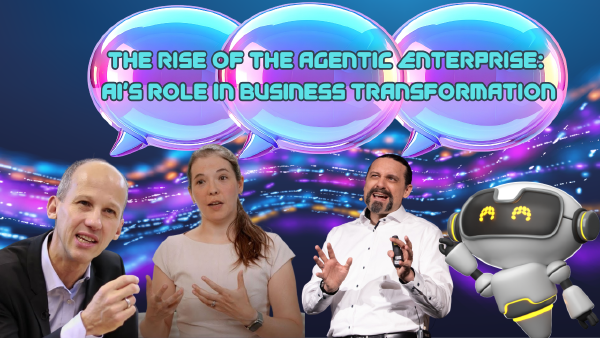
I invited Kaspar von Grünberg onto the channel. He has spent years shaping platforms, put the internal developer platform, the IDP, on the map with Humanitec, and built PlatformCon into the largest platform engineering community. He is now building Canyon, a control plane for enterprise AI, and his book Thinking in Platforms is on the way. By the end of this conversation you will know what an agentic platform actually is, why it matters, what it takes to build one, and how to start.
Most innovation does not die at the patent office. It dies long before that, in the way an organization makes decisions, executes, and turns ideas into outcomes.
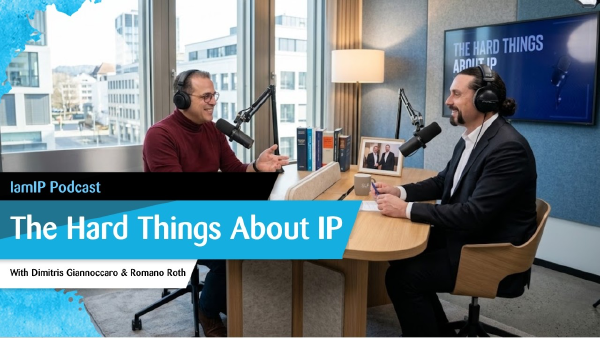
I was invited onto The Hard Things About IP, hosted by Dimitris Giannoccaro and produced by IamIP, for Episode 7. We stepped beyond patents and legal frameworks to the question that sits before every filing: how do organizations actually turn ideas into real results? We talked about AI transformation, organizational design, why so many AI initiatives get stuck in pilot mode, how feedback loops drive decision-making, and why accountability needs to live where the work happens.
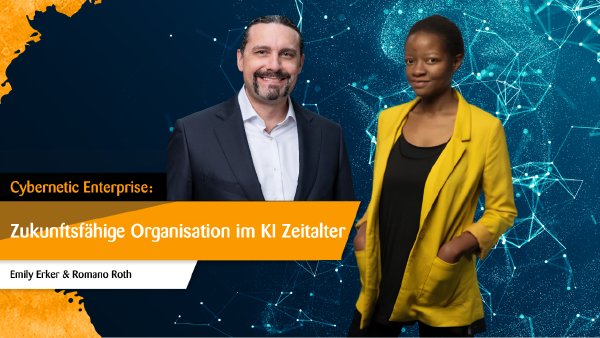
I joined Emily Erker on her show Lady Sunshine Live for a German-language conversation about building future-ready organisations through what I call a cybernetic enterprise: the integration of people, processes, technology, and AI in continuous feedback loops. The full video is embedded below; what follows is my English summary of the key ideas we covered.
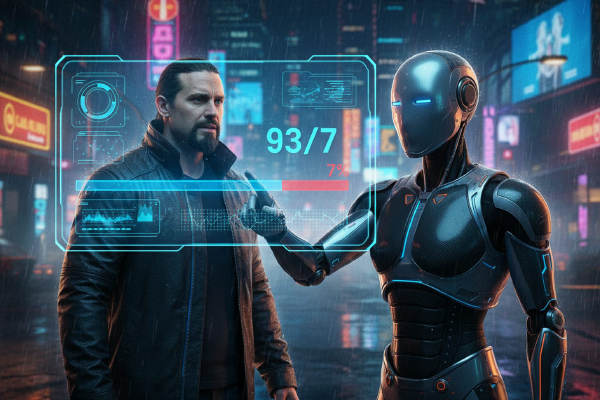
Banks spend 93% of their AI budget on technology. Only 7% goes to people. And then they wonder why 95% see no impact on their P&L.
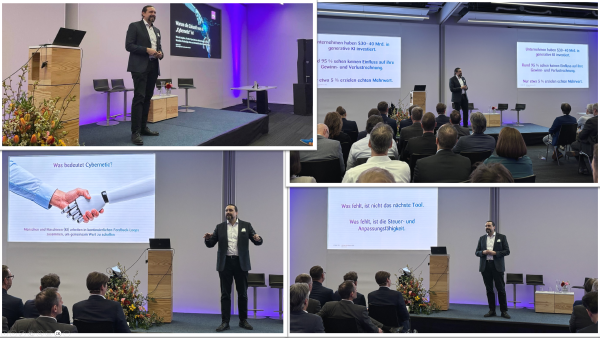
On March 31, 2026, I gave a keynote at the Zühlke Banking Talk in Schlieren on why the future of AI is “cybernetic” and what it takes to become an AI-native bank. The evening brought together perspectives from academia, a major German bank, and practitioners from Swiss financial institutions.
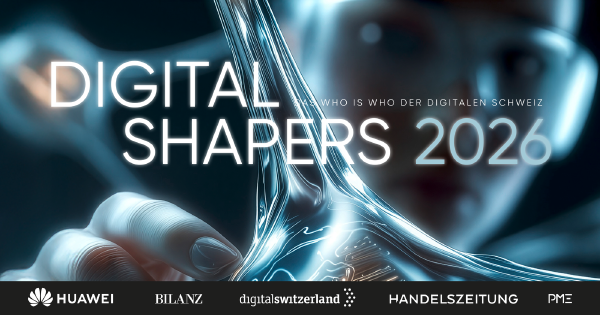
I am honored to share that I have been named a Digital Shaper 2026 in the Mentors category. The Digital Shapers initiative, organized by BILANZ, Handelszeitung, and digitalswitzerland with the support of Huawei, recognizes 100 of Switzerland’s most influential digital minds each year across ten categories.
It is not the technology that is under pressure, but its integration into everyday business operations. Budgets are tightening, regulation is taking hold, and boards are demanding robust results rather than more roadmaps. The era of non-committal pilot projects is ending.
Welcome back to The Cybernetic CxO, a monthly newsletter for CTOs, CIOs, and digital transformation leaders navigating the AI era.
March was a breakout month. My reach nearly tripled compared to February. My post about the 750 billion dollar fear narrative became a high-performing post. And out of 32 posts this month, 6 of the top 7 were about the same topic: AI and jobs.
Although AI has moved fast, many organisations haven’t. Most leaders we speak to aren’t short on ideas, proofs of concept, or vendor demos. The challenge is turning AI into something repeatable, a capability you can trust, scale, and steer without creating new risks or bottlenecks.
Welcome back to The Cybernetic CxO, a monthly newsletter for CTOs, CIOs, and digital transformation leaders navigating the AI era.
93/7: The Budget Split That’s Killing Your AI Program # This number hit a nerve. My post about the 93/7 split (93% of AI budgets going to technology, 7% to people and process) reached over 10,000 people and sparked a real debate.
To stay competitive, companies need a radical upgrade. The Cybernetic Enterprise transforms organizations into learning systems that adapt faster than their market changes.
2026 will be the year when the wheat is separated from the chaff in AI: it’s not the better model that makes the difference, but the ability to deliver impact under real-world conditions. What decision-makers need to know and do now so that AI evolves from experiment to true partner.