The digital landscape today feels less like a steady path and more like white water rapids. Constant change, new technologies, and relentless pressure to adapt. In this deep dive, two hosts explore my book “Cybernetic Enterprise V1.0.0” and unpack why traditional digital transformations keep failing, and what the alternative looks like: a holistic new operating model where adaptability becomes the organization’s default state.
You automated processes, optimized technology, and drove massive change dynamics over the past two decades: digitalization. But in a world where artificial intelligence (AI) is becoming a constant sparring partner, it is reaching its limits. Too often, it stops at isolated optimizations and fails to address systemic challenges. What companies now need is a mental upgrade to a new “operating system.” The organization of the future must be continuously learning, relentlessly data-driven, and uncompromisingly customer-centric. The journey there is strategic. The “Cybernetic Transformation” starts now.
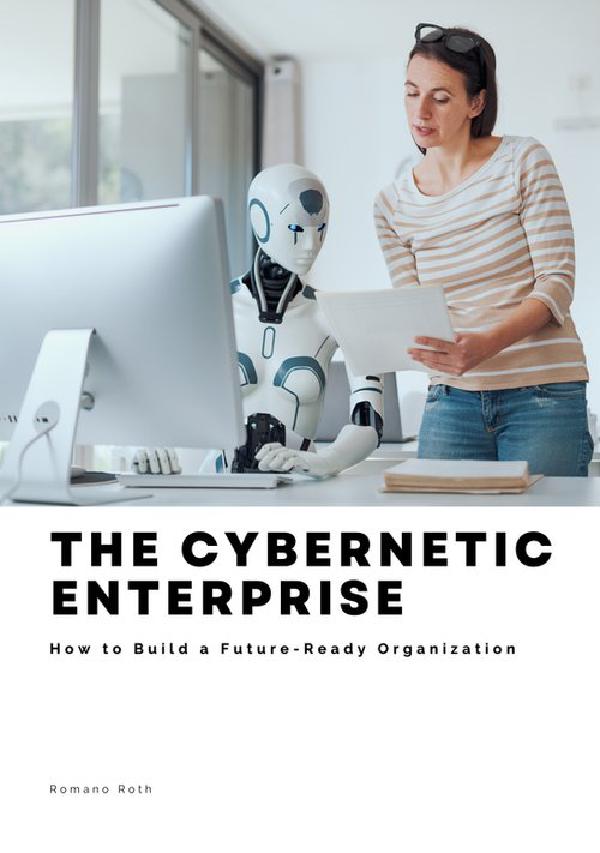
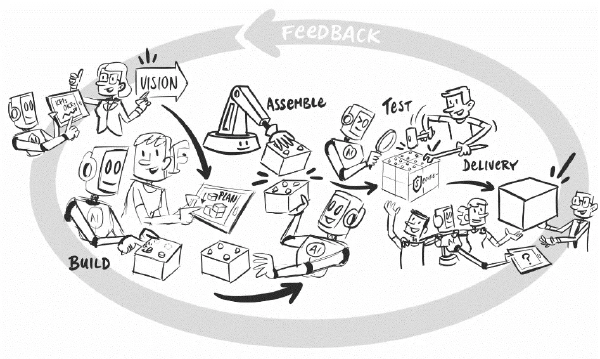
“Hey colleague!” Soon, this could be how we greet the person at the next desk, while at the same time addressing an AI system. In the future, Artificial Intelligence (AI) will no longer be just a technical tool, but an active team member. In four integration phases, ranging from assistance to co-creation, moderation, and ultimately high autonomy under human oversight, it will grow steadily and naturally into value streams, meetings, and decision-making processes. The organization of the future understands AI as part of its nervous system: continuously learning and permanently feedback-driven. Welcome to the era of Cybernetic Transformation.
The CTO’s copy of the model. Same idea, seen from the technology organization: architect for simplicity, give teams enough autonomy to be accountable, scale platform engineering so that autonomy does not turn into forty snowflakes, and embed AI with governance that people can follow without asking permission twice a day.
A model that cannot be measured stays an opinion. The Assessment turns the Cybernetic Enterprise into a structured maturity check across four dimensions: people, process, technology and data.
It is built to be run. Questions per dimension, levels that describe observable behavior instead of intent, and a result you can put next to the same unit six months later.
A reference volume rather than a narrative. The Cybernetic Enterprise stands on eight fields: cybernetics, systems thinking, lean and flow, agile, architecture, product and innovation, AI, and DevOps. Each has decades of practice behind it, each has its own literature, and each answers only part of the question.
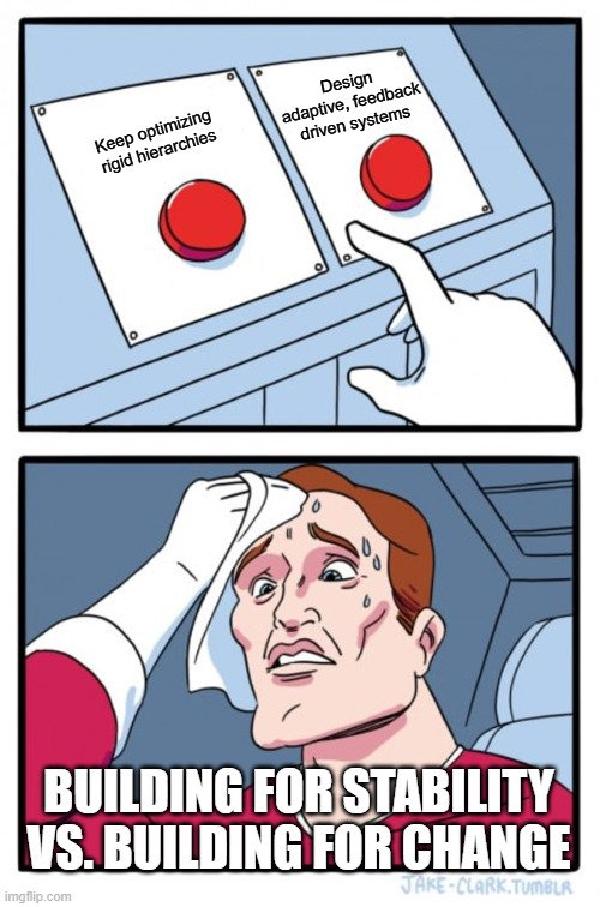
Most organizations still run on an operating system built for stability. Plan the year, cascade the plan, report back up. That holds as long as the ground does.
The Cybernetic Enterprise describes what takes its place: an organization that senses what is happening, decides close to the work, and adapts continuously. Feedback loops are the load-bearing structure. AI sits inside those loops instead of being bolted onto the side of the org chart.
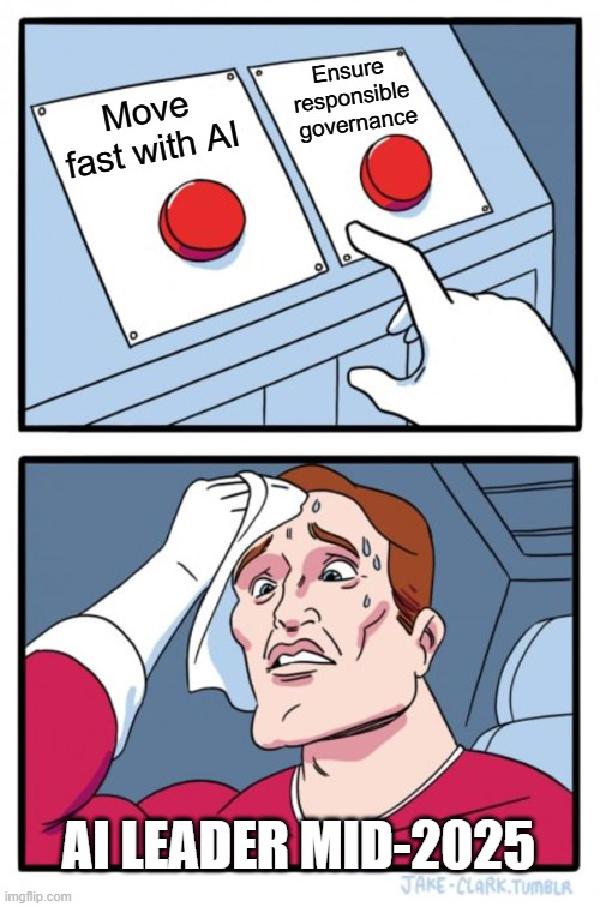
AI is scaling fast, but without the right governance, ambition can outpace control. In this article, we explore how smart, streamlined oversight turns governance from a blocker into a catalyst for enterprise-wide success.
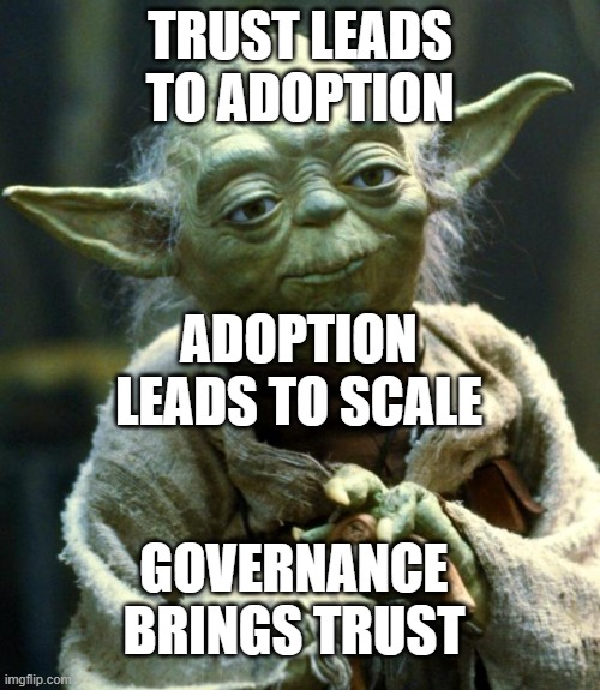
As AI adoption accelerates, many organisations find themselves unable to scale. The solution? Embedding governance from the outset. By integrating compliance, transparency, and accountability into the core of AI initiatives, leaders can transform governance into a catalyst for innovation, trust, and sustainable growth.
From Christoph Gulden
Welcome to Thought Leaders Talk, a podcast-style daily newsletter where bold minds meet real questions. In each episode, we talk with a guest who doesn’t just follow ideas, they shape them. No nonsense. No posturing. Just clear, original thinking on what truly matters.
AI is everywhere, but clarity, strategy, and real impact are often left by the wayside. We live in the era of what Romano Roth has dubbed ‘AI idiots’, an era of flashy demos rather than genuine long-term value. But a smarter way forward is possible. Discover the Cybernetic Enterprise and the business value it offers for industrial organisations.
How can we reduce costs, develop faster, and become more efficient? In this presentation, I walk through the core concepts of the Cybernetic Enterprise and show how organizations can continuously deliver value by combining value stream analysis, platform engineering, and AI.