We have already wired SAST, secret detection, and software composition analysis into the GitLab pipeline. Those checks cover the source code and its dependencies — but the artifact we actually ship is a container image. Operating system packages, the base image, and everything copied in along the way can carry vulnerabilities of their own. In Part 6 of our series, Patrick Steger and I add container scanning to the pipeline, build a Docker image from the jar we compiled earlier, and push it through Trivy and Grype.
Software composition analysis takes care of the libraries you pull in. But what about the code your own team writes? That is where Static Application Security Testing comes in. In Part 5 of our GitLab DevSecOps series, Patrick Steger and I add SAST to the pipeline, plant a few realistic vulnerabilities in our Spring Boot sample, and watch GitLab pick them up.
You ship a Java application that depends on Spring Boot, which depends on dozens of other libraries, each with its own license — and most teams cannot tell you what those licenses actually are. In Part 4 of our GitLab DevSecOps series, Patrick Steger and I add license compliance to the pipeline so the question is answered automatically on every commit. The good news: with GitLab Ultimate, this is one template line away.
Your code is the small part. The libraries you pull in are the big part — and that is where most of your CVEs live. In Part 3 of the GitLab DevSecOps series, Patrick Steger and I bring up a tiny Spring Boot demo, wire it into a GitLab pipeline, and then add Software Composition Analysis with a single include line.
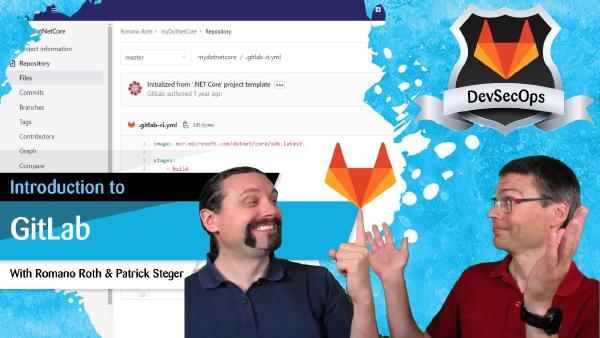
Before we can shift any security checks left, we need a project, a repository, and a pipeline that actually builds something. In Part 2 of our GitLab DevSecOps series, Patrick Steger and I log into GitLab, create a new .NET Core project from a template, and look at the .gitlab-ci.yml file that GitLab generates for us — including the build and test jobs that will become the foundation for everything we add later.
Why does security still get bolted on at the end of the development process, and how do we move it earlier without slowing teams down? In Part 1 of our GitLab DevSecOps series, Patrick Steger and I set the stage: what GitLab is, what shifting security left really means, and which CI/CD concepts you have to understand before you can build a DevSecOps pipeline that actually works.
A year ago I called DevSecOps, continuous delivery, cloud and AIOps as the trends for 2021. Most of those landed. For 2022 the picture gets more interesting because DevOps is no longer a single wave — different parts of the market are at very different stages of adoption. To make sense of that, I map the 2022 trends onto the technology adoption lifecycle: late majority, early majority and early adopters.
What will move the needle in DevOps in 2021? After a year that forced almost every organisation to accelerate digital delivery, the trends I see for 2021 are less about shiny new tools and more about discipline: making DevOps stick at scale, shifting security left, getting serious about continuous delivery, leaning further into the cloud, and watching the early signals from AIOps.