AI software now acts faster than a human can approve it. More and more companies and users are therefore asking: can AI be controlled at all?
A growing number of studies show that the question is a fair one. According to Gartner, more than 40 percent of agentic AI projects will be cancelled by the end of 2027, because of rising costs, unclear value or inadequate risk controls. In the same forecast, Gartner expects at least 15 percent of day-to-day work decisions to be made autonomously by AI agents by 2028. A global survey of executives by the Capgemini Research Institute points the same way: trust in fully autonomous agents fell from 43 to 27 percent within one year, while usage went up. The more experience companies gain with AI agents, the more clearly they see their limits and risks.
Christoph Gulden invited me onto his Thought Leaders Talk. Christoph reviews investment decisions for a living, I guide companies through technology waves. What came out of it is an argument about the 90 percent of AI pilots that never reach production, and what that means for the next investment decision. At one point Christoph contradicts me openly, and he is right to. The dialogue below is the one we worked out together. The original appeared in German on LinkedIn; this is my English version.
There is a pattern to how enterprise architecture fails. The models get more detailed, the governance gets heavier, and the people who make the real decisions stop showing up. The architecture is correct and nobody uses it.
AI portfolios rarely fail because leaders lack ideas. They fail because too many initiatives are funded before anyone proves they can move a business metric, fit into a real workflow, or survive enterprise constraints.
It is not the technology that is under pressure, but its integration into everyday business operations. Budgets are tightening, regulation is taking hold, and boards are demanding robust results rather than more roadmaps. The era of non-committal pilot projects is ending.
Although AI has moved fast, many organisations haven’t. Most leaders we speak to aren’t short on ideas, proofs of concept, or vendor demos. The challenge is turning AI into something repeatable, a capability you can trust, scale, and steer without creating new risks or bottlenecks.
Understand why most digital transformations fail, and you’ll figure out what tomorrow’s leading businesses will all have in common. Here’s how Cybernetics solves AI challenges at scale.
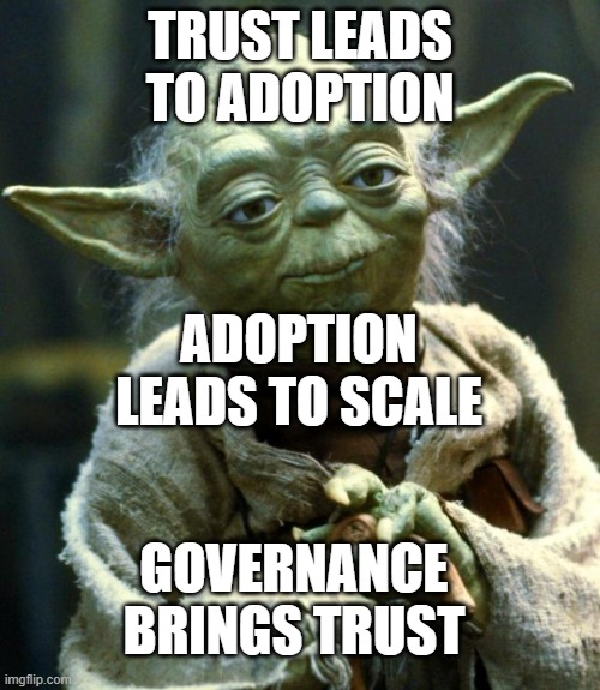
AI is scaling fast, but without the right governance, ambition can outpace control. In this article, we explore how smart, streamlined oversight turns governance from a blocker into a catalyst for enterprise-wide success.
As AI adoption accelerates, many organisations find themselves unable to scale. The solution? Embedding governance from the outset. By integrating compliance, transparency, and accountability into the core of AI initiatives, leaders can transform governance into a catalyst for innovation, trust, and sustainable growth.
Enterprise Architecture is a big word that hangs heavy in the air. What does it actually mean for your organisation, and how does AI fit into the picture? In this talk, which I gave at the HSLU (Lucerne University of Applied Sciences and Arts) in association with the Digital Veterans Association, I explore how Enterprise Architecture, platform engineering, and AI come together as a strategic lever for modern organisations.
My chapter from the book: Machines, Code, People: 50 things Zühlke engineers are passionate about