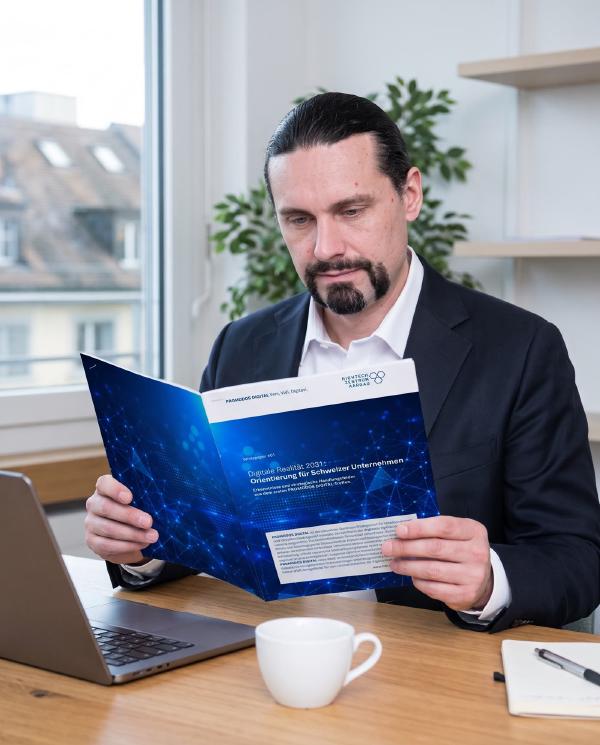
What will the digital reality of Swiss companies look like in 2031? That question opened PROMODOS DIGITAL on 7 September 2026 in Baden, a dialogue forum run by the Hightech Zentrum Aargau. About 20 people from business, research, public administration and politics meet there two to three times a year. I am one of them. This whitepaper came out of the first round. It is written for boards and executive teams.
Welcome to Edition 10 of The CAIO.
Swiss telecom Sunrise cut 147 jobs this year and now says up to 450 more could go, citing AI and automation. A study of more than half a million developers found that AI tools raised the amount of code by 958 percent and the number of releases by 20 percent, and customers barely noticed. Both stories have the same gap in the middle. The tool arrived, and the process it was dropped into stayed the same. A layoff does not change that. Neither does a licence.
Are you afraid of AI? Many people are, and the industry is happy to feed that fear. Fear gets attention, and attention raises money.
The talk takes the two big fears apart one at a time. Will AI kill us all? AI agents don’t turn evil. They play whatever role we give them. The real question is whether we hand the actor a real gun, and people make that decision. Will AI take our jobs? The data shows no mass unemployment, yet. It does hit the entry level, the jobs that are mostly tasks, and it raises the bar for human work from the average to the top. The bar has moved before, over years. This time it moves in months.
For years the question was: “Can AI do that yet?” That is no longer the question. Agentic AI can now take over a surprising amount of work on its own. The bottleneck is no longer the machine.
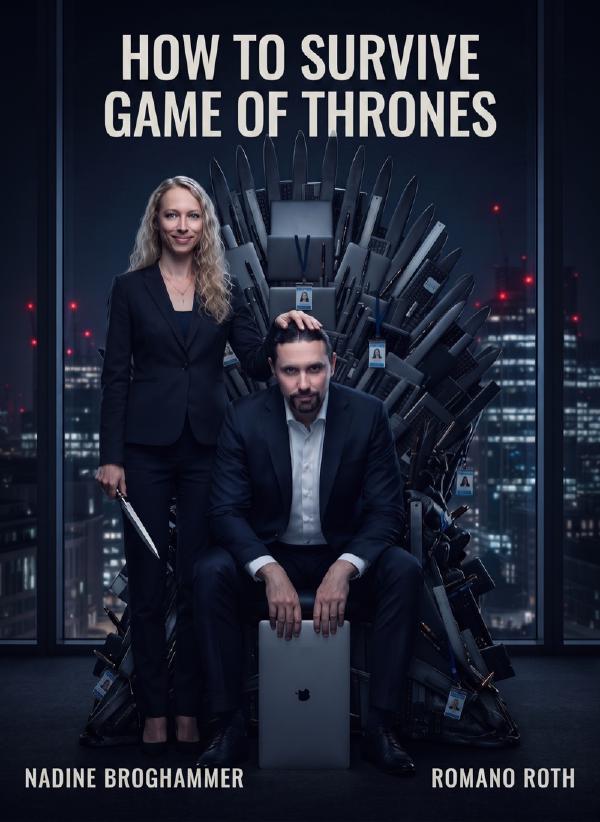
Written with Nadine Broghammer.
Next to the org chart every organization runs a second structure: who has influence, who owes whom, which disagreement is about the work and which one is about position. Most people learn to read it the slow way, by losing a few rounds first.
Summary # Companies have stopped asking whether employees can write a decent prompt. They want AI fluency, a confident and reflected way of working with AI. At UBS this has become career-relevant: according to research by NZZ am Sonntag, AI skills play a role in hiring, promotion and pay. Stefan Seiler, member of the group executive board and head of HR, puts it more carefully: “AI skills and practical experience are an important factor for future professional success.” The bank opens an “AI power hour” in every employee’s calendar each week and measures tool usage at an aggregated level.
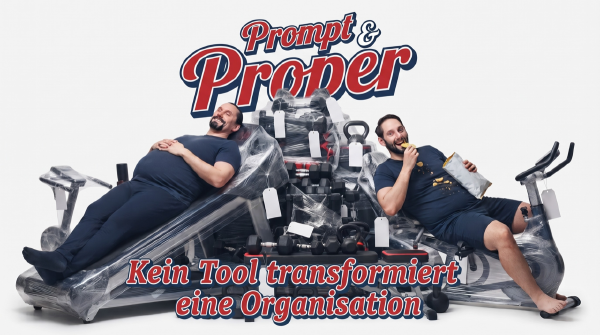
We have spent a lot of this podcast on the technology and on the effects of AI. In episode 7 of Prompt & Proper, Steffen Ochsenreither from Swiss Post and I take on the transformation itself. Not what AI does inside a company, but how you point a company at AI. The episode is in German, and this post captures the core of the conversation.
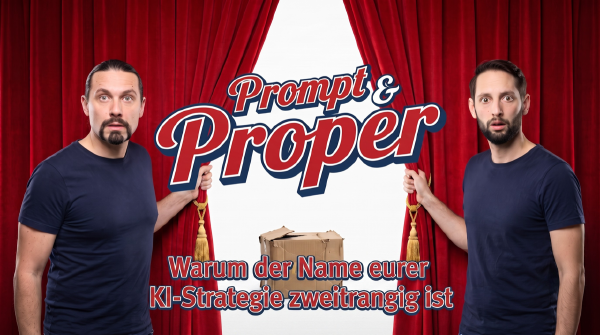
As Chief AI Officer I am supposed to put an AI strategy in place, and the headline alone turns into work. AI-First, AI-Native, AI-Enabled, AI-Ready, AI-Shaped, AI-Augmented. In episode 6 of Prompt & Proper, Steffen Ochsenreither from Swiss Post and I go through the terms and end up somewhere the question does not suggest. The episode is in German, and this post captures the core of the conversation.
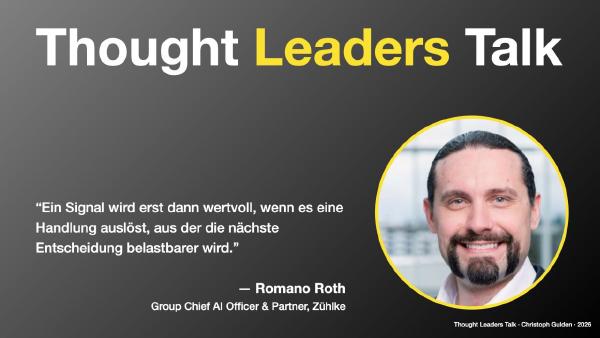
Christoph Gulden invited me onto his Thought Leaders Talk. Christoph reviews investment decisions for a living, I guide companies through technology waves. What came out of it is an argument about the 90 percent of AI pilots that never reach production, and what that means for the next investment decision. At one point Christoph contradicts me openly, and he is right to. The dialogue below is the one we worked out together. The original appeared in German on LinkedIn; this is my English version.
Most AI projects do not fail on the technology. They fail earlier, on a thinking error: the hunt for one giant use case, the lighthouse project.
This is the launch of my new podcast Prompt & Proper, which I host together with Steffen Ochsenreither from Swiss Post. Every two weeks, in German, hands-on and without the marketing speak. Episode 1 takes apart what we call the “giant use-case fallacy”: why the management signal “we are doing AI now” so often ends in nothing, and what a good first use case actually needs. The episode is in German, and this post captures the core of the conversation.
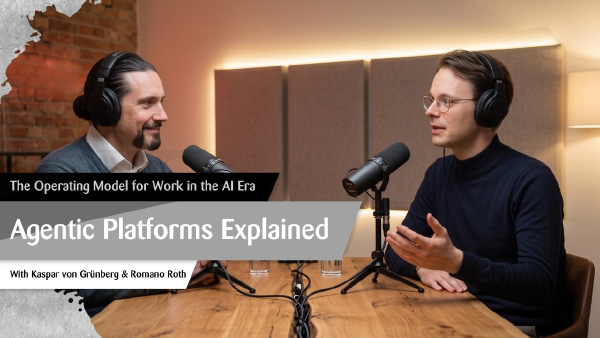
Everybody is suddenly saying “agentic platform.” Almost nobody can define one. That is exactly what we set out to fix.
I invited Kaspar von Grünberg onto the channel. He has spent years shaping platforms, put the internal developer platform, the IDP, on the map with Humanitec, and built PlatformCon into the largest platform engineering community. He is now building Canyon, a control plane for enterprise AI, and his book Thinking in Platforms is on the way. By the end of this conversation you will know what an agentic platform actually is, why it matters, what it takes to build one, and how to start.
Most innovation does not die at the patent office. It dies long before that, in the way an organization makes decisions, executes, and turns ideas into outcomes.
I was invited onto The Hard Things About IP, hosted by Dimitris Giannoccaro and produced by IamIP, for Episode 7. We stepped beyond patents and legal frameworks to the question that sits before every filing: how do organizations actually turn ideas into real results? We talked about AI transformation, organizational design, why so many AI initiatives get stuck in pilot mode, how feedback loops drive decision-making, and why accountability needs to live where the work happens.