I joined Lisa Stähli on the Hello 50:50 World podcast, the show with the mission to make tech more humane, for a conversation about what actually happens when software teams add AI to the way they work. We talked about how AI is reshaping software engineering, DevOps and agile ways of working, where the real bottlenecks sit, the human cost of moving faster, and why the organisation you build around the technology is what decides whether AI helps or hurts.
I joined the adorsys Tapas & Pretzels podcast for a conversation with co-hosts Tim and David, fellow Chief AI Officer, about the question every leader is now asking: how do you move AI from isolated experiments to a company-wide capability? We talked about token economics, what the Chief AI Officer role actually demands, why capability beats tools, the trust gap that governance exists to close, and why most companies are speeding up broken processes instead of rethinking them.
I joined Emily Erker on her show Lady Sunshine Live for a German-language conversation about building future-ready organisations through what I call a cybernetic enterprise: the integration of people, processes, technology, and AI in continuous feedback loops. The full video is embedded below; what follows is my English summary of the key ideas we covered.
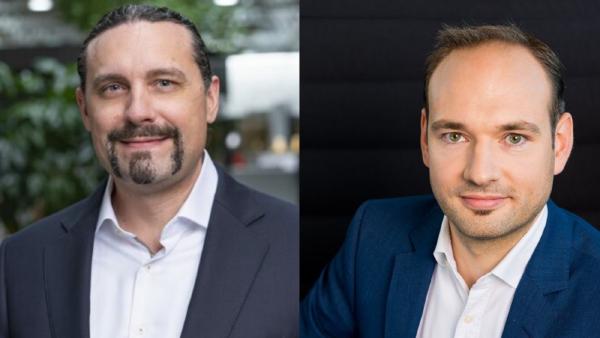
Header photo: Romano Roth (left) and Raphael Reischuk. Source: Zühlke (zVg), via inside-it.ch.
Effective 1 May 2026, the Zühlke Group has introduced two new roles at group level: a Group Chief Technology Officer (CTO) and a Group Chief AI Officer (CAIO). I have taken on the Group CAIO role; my long-time colleague Raphael Reischuk has been appointed Group CTO. Both of us were already partners in the group.
Although AI has moved fast, many organisations haven’t. Most leaders we speak to aren’t short on ideas, proofs of concept, or vendor demos. The challenge is turning AI into something repeatable, a capability you can trust, scale, and steer without creating new risks or bottlenecks.
Discover the people, processes and technology you’ll need to mitigate setbacks on your transformation journey, and unlock AI-augmented ROI that compounds as it scales.
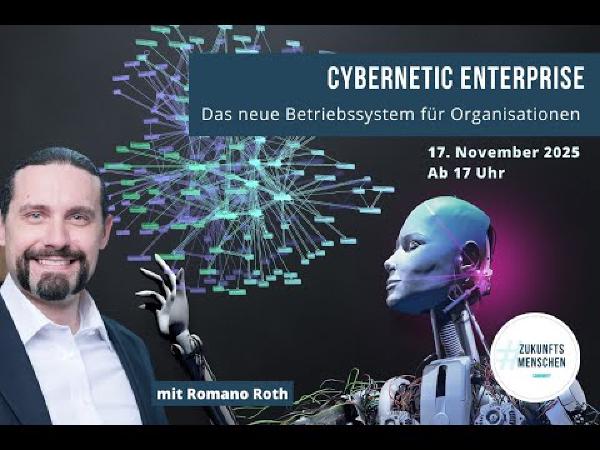
Most companies that work in an agile way today while simultaneously trying to implement AI will not survive the next decade, in my opinion. The reason: their operating system is too old. The future is not agile. The future is not AI either. The future is cybernetic.
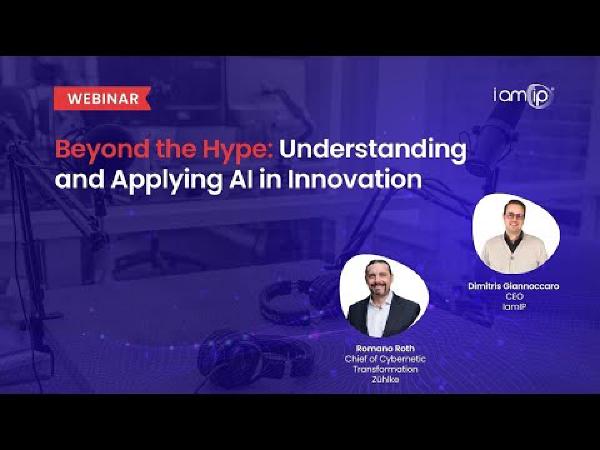
Does AI really solve the problems we have? What does it mean for innovation and intellectual property? Will AI replace patent analysts? In this webinar with IamIP, I cut through the fog of AI hype and share a practical framework for understanding where AI genuinely adds value, and where it falls short.
How much agility can software development really handle, and where does agility tip into chaos? In this episode of the “Modern Work 2 Go” podcast (in German), I speak with Florian Schneider about exactly these questions. We dive deep into a concrete real-world example: an agile transformation at a Swiss bank that I accompanied over eight years. The conversation covers the shift from waterfall to agility, scaling with SAFe, building value streams, and why continuous improvement is the central pillar of every transformation.
When people, machines, and algorithms work as a “team,” more than automation emerges: a learning and resilient factory. But how can industrial companies make the leap into the AI era without losing their human element?
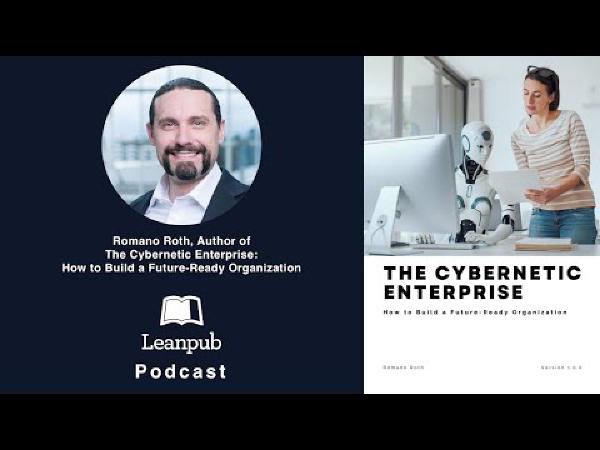
In this LeanPub podcast episode, host Len Epp and I have a deep conversation about my book “The Cybernetic Enterprise: How to Build a Future-Ready Organization.” We cover everything from my career journey at Zühlke, to why the future is cybernetic rather than just AI, to the practical steps of enterprise transformation. If you have ever wondered what it takes to build an organization that can continuously adapt, this conversation covers the essential ideas.
I recently joined the Digital Analog Podcast to talk about what it really means when humans and machines work together. As the Chief of Cybernetic Transformation and Partner at Zühlke, I deal with these questions every day. In this conversation, we covered everything from the biggest obstacles in digital transformation to why AI agents could change the way we collaborate, and why simplicity should be every organization’s guiding principle.