I recently joined Ben on the We Chat Tech podcast for a wide-ranging conversation about DevOps, leadership, career growth, and the future of AI in software engineering. Over 23 years at Zühlke, I have worked across industries helping organizations transform how they deliver software. In this episode, we covered everything from the fundamentals of DevOps to the skills that future engineers will need.
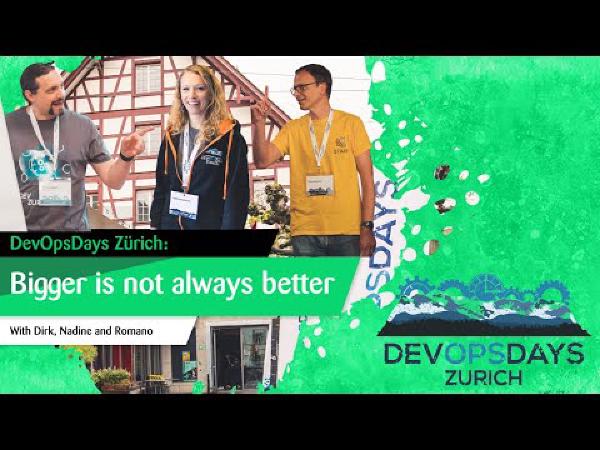
On October 4, 2024, the global DevOpsDays Organizer Summit took place in Antwerp, bringing together organizers from DevOpsDays events around the world. Our team from DevOpsDays Zürich delivered a presentation titled “Bigger is Not Always Better.” I was not able to attend in person due to another conference, but my co-organizers Nadine and Dirk absolutely rocked the stage. Here is the story of why we decided not to scale our sold-out conference.
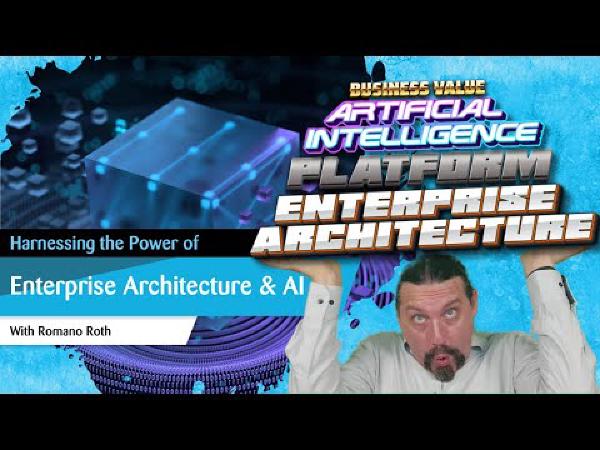
Enterprise Architecture is a big word that hangs heavy in the air. What does it actually mean for your organisation, and how does AI fit into the picture? In this talk, which I gave at the HSLU (Lucerne University of Applied Sciences and Arts) in association with the Digital Veterans Association, I explore how Enterprise Architecture, platform engineering, and AI come together as a strategic lever for modern organisations.
In this episode of the Ship It podcast, Gerhard Lazu and I have a deep conversation about what good DevOps looks like in practice. We talk about the real challenges companies face during transformations, how to deal with middle management resistance, technology choices, and where the industry is heading with AIOps and hyper automation.
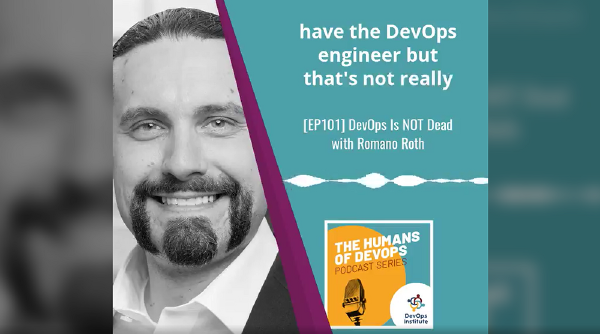
I joined Eveline Oehrlich, Chief Research Officer at the DevOps Institute, on the Humans of DevOps podcast for a conversation about whether DevOps is dead. Spoiler: it is not. But the reality in most companies is that we have not progressed as far as many people think. In this episode, we talk about what a Chief of DevOps actually does, why companies still struggle with walls of confusion, how platform engineering enables scaling, and my prediction about digital factories.
DevOps transformations look simple on paper. Take an existing environment, add the Spotify model, throw in SAFe, sprinkle some Team Topologies, add DevOps and platform engineering, stir well, add as many tools as possible, and stir again. What happens? It crashes. And people say “DevOps is bullshit.”
In this podcast episode, I have a conversation with Peyton Einhaus about one of the most challenging aspects of any transformation: dealing with resistance. Whether you are running an agile transformation, a DevOps transformation, or any organizational change, resistance is always present. The question is how you handle it effectively.
Every DevOps enthusiast faces the same challenge at some point: you know DevOps works, your team knows it works, but the decision makers want proof. They want a business case. In this talk at ContainerDays 2019, I break down a practical framework for convincing CIOs and managers to fund your DevOps transformation.
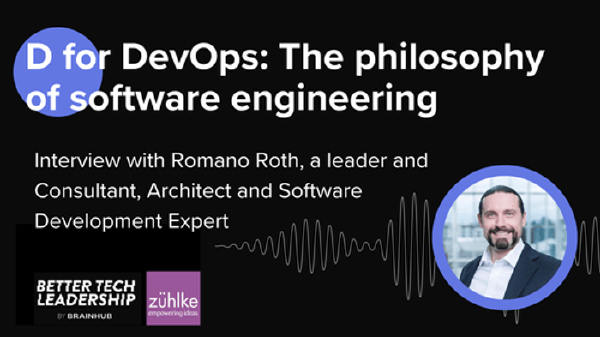
I had the honor of being interviewed by 📈 Matt Warcholinski 💾 from Brainhub in his 𝐏𝐨𝐝𝐜𝐚𝐬𝐭🎙️ on 𝐁𝐞𝐭𝐭𝐞𝐫 𝐓𝐞𝐜𝐡 𝐋𝐞𝐚𝐝𝐞𝐫𝐬𝐡𝐢𝐩.
Join Eveline Oehrlich and Romano Roth, to discuss whether DevOps is Dead.
Romano Roth is Chief of DevOps at Zühlke. In this interview, he explains why DevOps is not bullshit, how transformation succeeds in companies, and what IT students really need to learn.
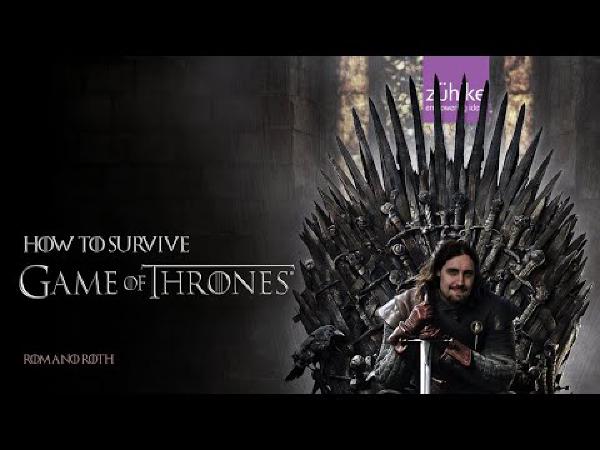
In every project, every company, every department, there is a Game of Thrones being played. Power plays between people, teams, and departments that result in massive conflicts. In this talk, I share why these conflicts exist, what strategies you can use to survive them, and how to stay healthy during difficult times. The Game of Thrones is played everywhere. It starts in kindergarten with the fight over a puppet and ends at your deathbed when descendants fight over your heritage.