Welcome to Edition 7 of The CAIO.
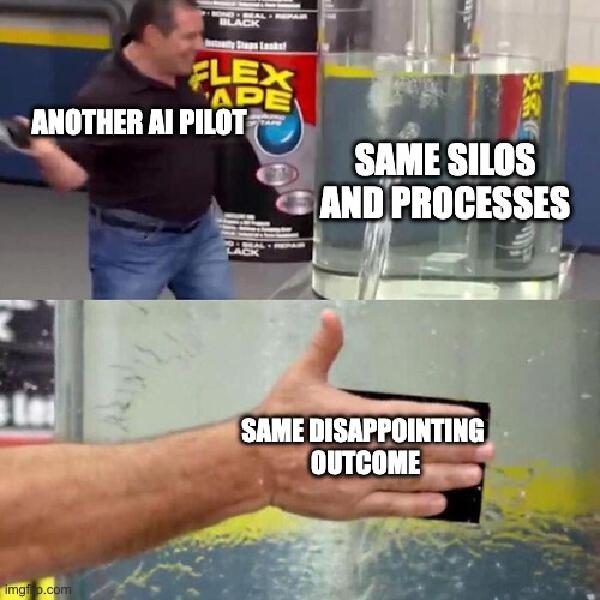
I have argued for years that the model is the small part and the discipline around it is the work. It is a claim that is easy to nod along to and easy to dismiss as a consultant’s line. In July it stopped being a line. A research group tested it on 5,000 codebases and put a number on it. A systems engineer took apart a viral “37,000 lines a day” boast and showed what that volume actually costs. Both posts reached far beyond my usual audience, one of them among the highest reach I have had all year. The audience is not tired of the argument. It wants the evidence.
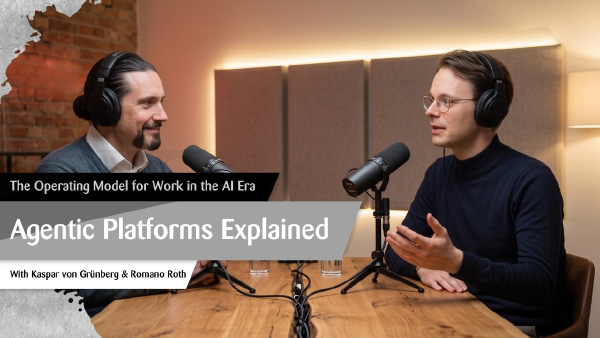
Everybody is suddenly saying “agentic platform.” Almost nobody can define one. That is exactly what we set out to fix.
I invited Kaspar von Grünberg onto the channel. He has spent years shaping platforms, put the internal developer platform, the IDP, on the map with Humanitec, and built PlatformCon into the largest platform engineering community. He is now building Canyon, a control plane for enterprise AI, and his book Thinking in Platforms is on the way. By the end of this conversation you will know what an agentic platform actually is, why it matters, what it takes to build one, and how to start.
Welcome to the first issue of The CAIO. The newsletter you knew as The Cybernetic CxO has a new name, and the reason is on the cover of this issue. From 1 May, I am Group Chief AI Officer at Zühlke. The job is the same work I have been doing for years: getting AI past the pilot phase through transformation across organisation, process, and technology, not by tuning the model alone. The newsletter title now says that out loud.
It is not the technology that is under pressure, but its integration into everyday business operations. Budgets are tightening, regulation is taking hold, and boards are demanding robust results rather than more roadmaps. The era of non-committal pilot projects is ending.
To stay competitive, companies need a radical upgrade. The Cybernetic Enterprise transforms organizations into learning systems that adapt faster than their market changes.
2026 will be the year when the wheat is separated from the chaff in AI: it’s not the better model that makes the difference, but the ability to deliver impact under real-world conditions. What decision-makers need to know and do now so that AI evolves from experiment to true partner.
Artificial intelligence (AI) is everywhere. Yet lasting business value often remains elusive. Too many companies still see AI as a tool or quick fix, rather than what it can be: a strategic partner for continuous learning and adaptation. To achieve competitive advantages in a dynamic, data-driven world, organizations must fundamentally restructure themselves as a Cybernetic Enterprise, where AI is firmly anchored as a feedback and learning amplifier. Instead of viewing AI in isolation or as an add-on, it should become an integral part of the organizational operating system. Only when AI transforms data, processes, and customer interactions into actionable learning does a useful tool become a true gamechanger, one that makes companies more agile, capable of learning, and future-oriented.
Most companies that work in an agile way today while simultaneously trying to implement AI will not survive the next decade, in my opinion. The reason: their operating system is too old. The future is not agile. The future is not AI either. The future is cybernetic.
How much agility can software development really handle, and where does agility tip into chaos? In this episode of the “Modern Work 2 Go” podcast (in German), I speak with Florian Schneider about exactly these questions. We dive deep into a concrete real-world example: an agile transformation at a Swiss bank that I accompanied over eight years. The conversation covers the shift from waterfall to agility, scaling with SAFe, building value streams, and why continuous improvement is the central pillar of every transformation.
The Cybernetic Enterprise: How to Build a Future-Ready Organization is your comprehensive operating system for navigating the next era of business transformation.
Welcome to the Leanpub Launch video for The Cybernetic Enterprise Course: How to Build a Future-Ready Organization by Romano Roth
In this LeanPub podcast episode, host Len Epp and I have a deep conversation about my book “The Cybernetic Enterprise: How to Build a Future-Ready Organization.” We cover everything from my career journey at Zühlke, to why the future is cybernetic rather than just AI, to the practical steps of enterprise transformation. If you have ever wondered what it takes to build an organization that can continuously adapt, this conversation covers the essential ideas.
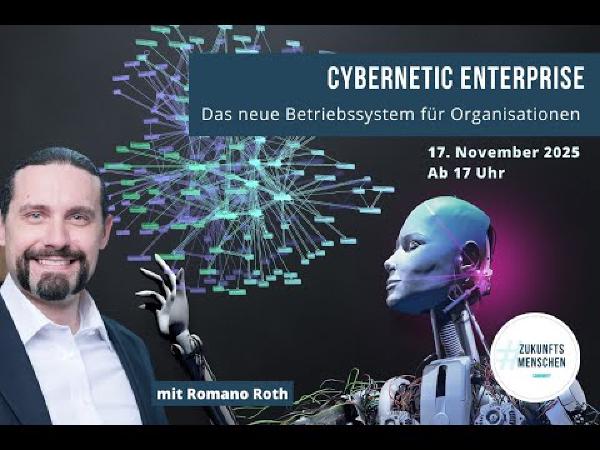
You know that feeling when your company just feels slow? Always lagging, always crashing, not built for the modern world? What if that is not just a feeling? What if your organization is literally running on an outdated operating system? In this video, we explore the concept of the Cybernetic Enterprise and why it represents a fundamental upgrade for how businesses operate.