At the Conf42 DevSecOps 2024 conference, I presented my approach to architecting for continuous delivery. After more than 21 years at Zühlke, working across industries on DevOps transformations, I keep seeing the same fundamental problem: value streams broken by walls of confusion. In this talk, I walk through how organizations can move from project thinking to product thinking, build in quality and security from the start, architect for operability, and use platform engineering to scale it all.
As Chief of DevOps and Partner at Zühlke, I have spent over two decades helping companies continuously deliver value. In this video, I walk through the complete Zühlke DevOps offering, from our understanding of DevOps and the challenges of scaling it, to our concrete service offerings including the Digital Factory and the Platform Plane.
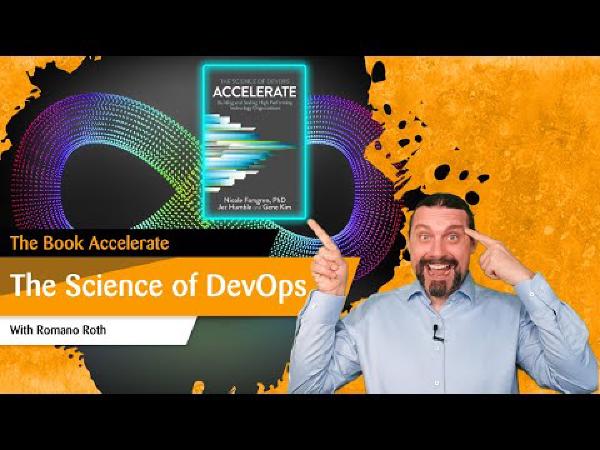
In this video, I take a deep dive into the science behind DevOps. Specifically, I look at the DORA metrics, where they come from, and the book Accelerate that provides the scientific foundation for everything we know about high-performing software delivery organizations.
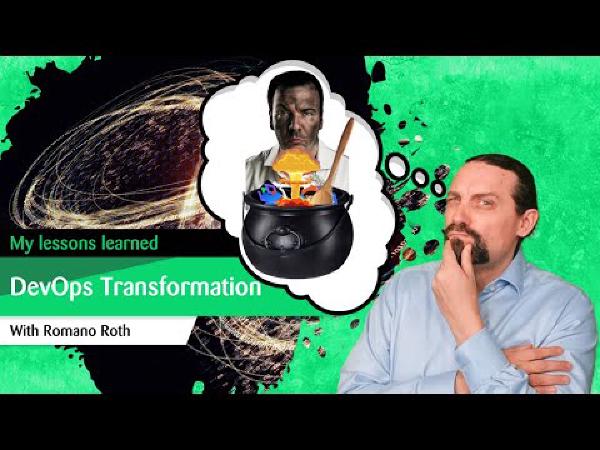
DevOps transformations look simple on paper. Take an existing environment, add the Spotify model, throw in SAFe, sprinkle some Team Topologies, add DevOps and platform engineering, stir well, add as many tools as possible, and stir again. What happens? It crashes. And people say “DevOps is bullshit.”
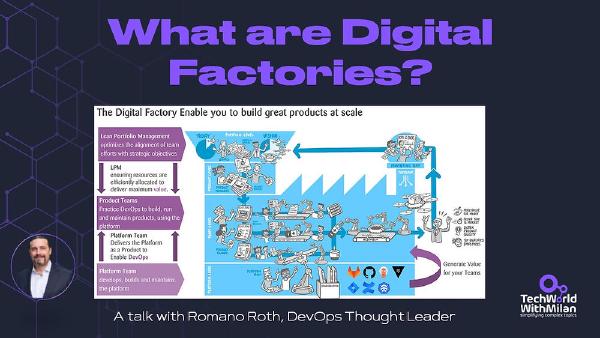
a talk with Romano Roth, DevOps Thought Leader and Dr. Milan Milanović Architecture Thought Leader. Source: https://newsletter.techworld-with-milan.com/p/what-are-digital-factories
Sometimes in the world of platform engineering, we need to pause and appreciate the digital landscapes we build every day. This short, playful video is a guided meditation for platform engineers. Find a comfortable position, take a deep breath, and let me guide you through the world you create.
Many companies are suffering from a lack of alignment between business and IT, silo thinking, and inefficiencies in product development, while time to market is becoming increasingly important.
The Problem # These companies try to adopt DevOps in their organizations, but unfortunately, sometimes the DevOps approach is misunderstood, wrongly implemented, and it does not scale as expected.
At The DEVOPS Conference, I presented on a topic that has been at the heart of my work for over two decades: how to architect for continuous delivery. This talk covers the broken value stream I see in most companies, why product thinking matters more than project thinking, the science behind software delivery performance, and how platform engineering enables organizations to scale DevOps through digital factories.
At the State of DevOps in Switzerland 2023 event, I joined Adrian Kosmaczewski from VSHN to present the latest findings on DevOps adoption in the Swiss market. Adrian shared four years of survey data, while I focused on how to successfully scale DevOps through platform engineering and the concept of the digital factory. This event brought together DevOps professionals both on-site and virtually for presentations and a lively panel discussion.
Join Eveline Oehrlich and Romano Roth, to discuss whether DevOps is Dead.
The internet is full of posts claiming that DevOps is dead. “DevOps is bullshit.” “Platform Engineering will replace DevOps.” “SRE is the future.” In this video, I explain why all of these claims are wrong, where they come from, and how DevOps, Platform Engineering, and Site Reliability Engineering actually relate to each other.
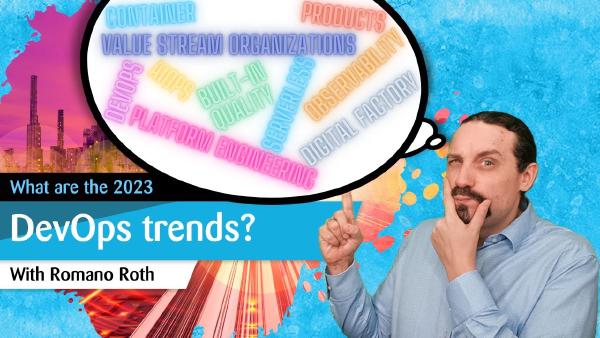
Two years of trend predictions later, the DevOps conversation has shifted. In 2021 we talked about adoption. In 2022 we mapped trends onto the adoption lifecycle. In 2023 the most useful lens is the value stream: how products get built, run, quality-assured, monitored, organised, enabled and industrialised end-to-end. Most organisations still suffer from silos and project-based annual planning. The 2023 trends are about closing those gaps.