Digital and agile was yesterday # Many companies believe they can secure their future with a dash of agility and rapid AI pilot projects. But those who simply “graft” artificial intelligence onto outdated structures will fail. A radical upgrade of the operating model is needed.
When people, machines, and algorithms work as a “team,” more than automation emerges: a learning and resilient factory. But how can industrial companies make the leap into the AI era without losing their human element?
Original publication: DIGITAL MANUFACTURING
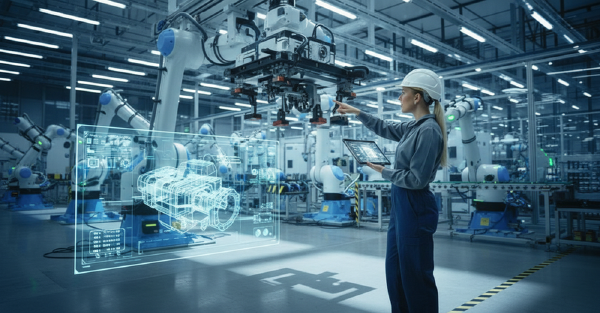
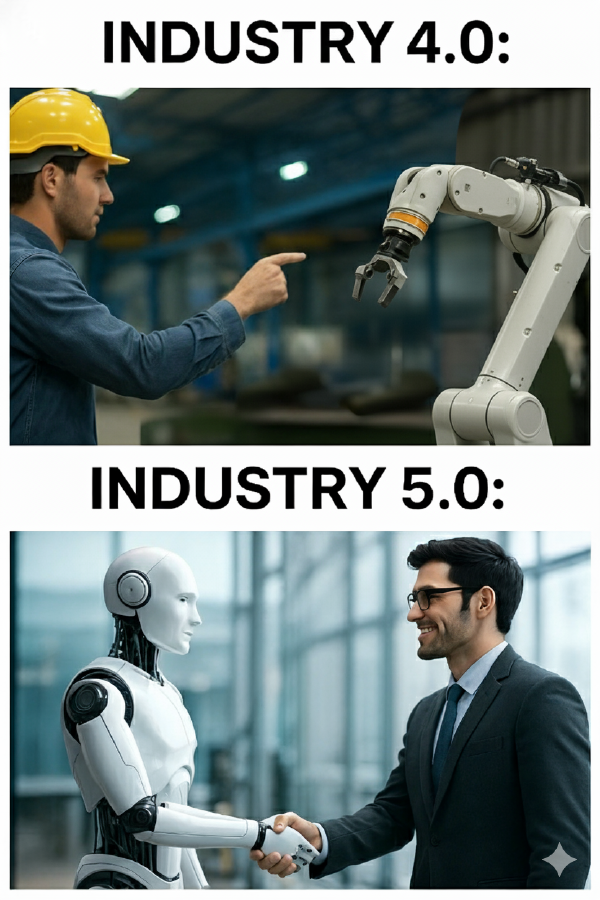
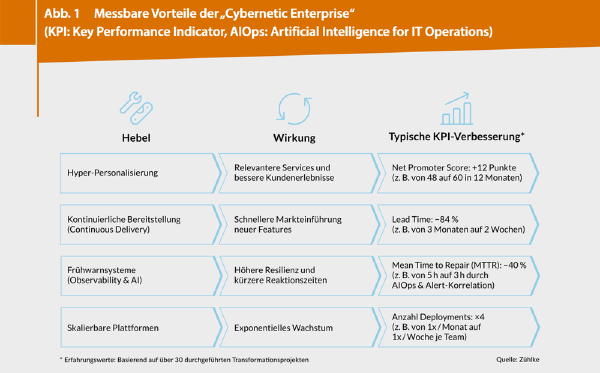
The industrial success story is opening its next chapter. Some call it Industry 5.0, although it’s more than just an upgrade of Industry 4.0: Here, people, sustainability, and resilience are moving to the center of operations. Artificial intelligence is transforming production facilities, roles, and decision-making processes. Human intuition meets machine precision, merging into hybrid value creation. The entrepreneurial operating model of the future, the “Cybernetic Enterprise,” shows how this collaboration can work.
You automated processes, optimized technology, and drove massive change dynamics over the past two decades: digitalization. But in a world where artificial intelligence (AI) is becoming a constant sparring partner, it is reaching its limits. Too often, it stops at isolated optimizations and fails to address systemic challenges. What companies now need is a mental upgrade to a new “operating system.” The organization of the future must be continuously learning, relentlessly data-driven, and uncompromisingly customer-centric. The journey there is strategic. The “Cybernetic Transformation” starts now.
“Hey colleague!” Soon, this could be how we greet the person at the next desk, while at the same time addressing an AI system. In the future, Artificial Intelligence (AI) will no longer be just a technical tool, but an active team member. In four integration phases, ranging from assistance to co-creation, moderation, and ultimately high autonomy under human oversight, it will grow steadily and naturally into value streams, meetings, and decision-making processes. The organization of the future understands AI as part of its nervous system: continuously learning and permanently feedback-driven. Welcome to the era of Cybernetic Transformation.
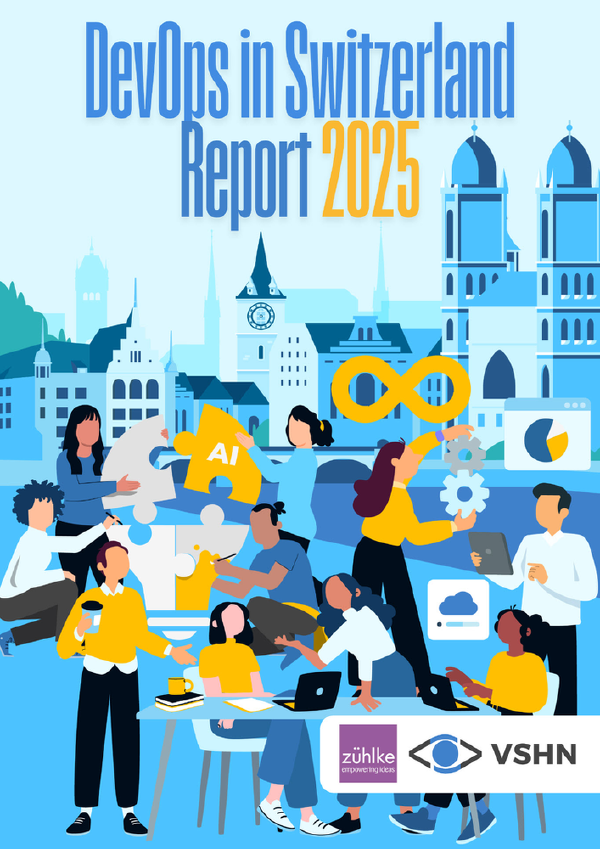
DevOps in Switzerland has reached a tipping point. Once a grassroots movement, it is now a strategic lever for digital resilience, efficiency, and innovation. The DevOps in Switzerland Report 2025, jointly produced by Zühlke and VSHN, presents clear signals of this transformation. Drawing from 184 survey responses, the sixth edition of the report reveals how Swiss organizations are not just adopting DevOps, but scaling it through platform engineering and augmenting it with AI.
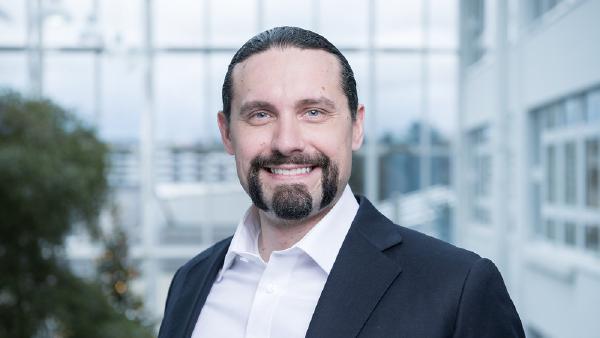
Romano Roth is Chief of Cybernetic Transformation at Zühlke and is deeply engaged with the impact of AI on organizations, technology, and culture. In this guest article, he explores how AI is affecting professionals, especially in the coding space.
Romano Roth advocates the importance of companies focusing on the developer experience and enabling developers to concentrate on creating business value.
Romano Roth is Chief of DevOps at Zühlke. In this interview, he explains why DevOps is not bullshit, how transformation succeeds in companies, and what IT students really need to learn.