Embedded and IoT devices are becoming increasingly popular in today’s world. These devices are used in various industries, such as healthcare, manufacturing, consumer goods and home automation. Ensuring the quality of these devices is crucial to ensure their reliability, safety, and functionality. But how to do that?
By Pia Wiedermayer and Romano Roth
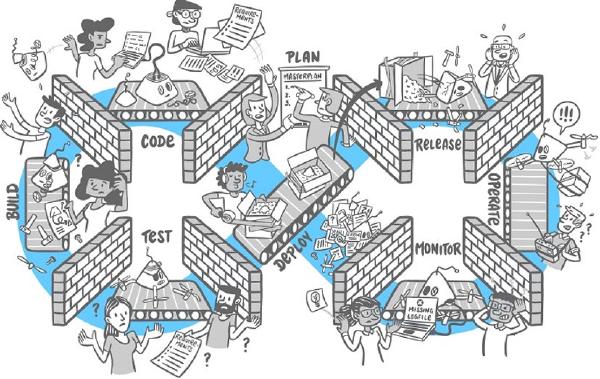
In many organizations and projects, software development involves numerous employees and machines performing tasks separately. This approach results in problems. Here’s how going back to the original way of developing software and building an organic digital factory can help.
In this article, I explain what Test End to End means within the SAFe® DevOps Health Radar and why it is essential for delivering high-quality software. Please note that everything discussed here is under the license of Scaled Agile, and that the Scaled Agile Framework is a framework to be used as a toolbox. Take out what fits your needs or what solves your problem.
Automating tests is a complex and demanding task. The iterative approach in the development process also means that the automated tests have to be continuously adapted. Behaviour-driven development (BDD) can be used to simplify and speed up test automation.
When we are talking about traditional testing, we are talking about the V-model which is used in waterfall projects. We do requirement engineering, we write down features for our software, then we break them down and then write stories which are then given to the developer to implement this story. The developer then codifies this and then writes unite tests and integration tests.