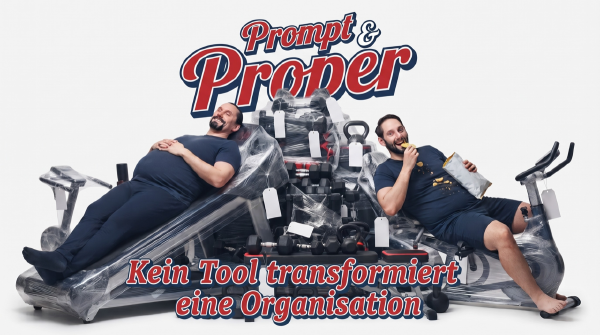
We have spent a lot of this podcast on the technology and on the effects of AI. In episode 7 of Prompt & Proper, Steffen Ochsenreither from Swiss Post and I take on the transformation itself. Not what AI does inside a company, but how you point a company at AI. The episode is in German, and this post captures the core of the conversation.
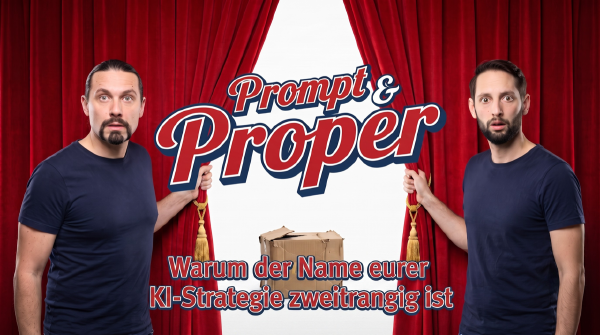
As Chief AI Officer I am supposed to put an AI strategy in place, and the headline alone turns into work. AI-First, AI-Native, AI-Enabled, AI-Ready, AI-Shaped, AI-Augmented. In episode 6 of Prompt & Proper, Steffen Ochsenreither from Swiss Post and I go through the terms and end up somewhere the question does not suggest. The episode is in German, and this post captures the core of the conversation.
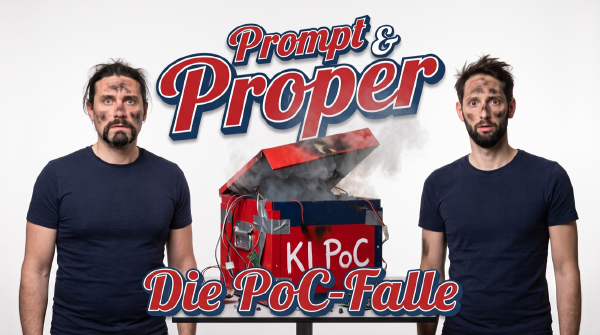
A proof of concept is quick to build these days, and that is exactly where the problem starts. Classically around 70 percent of all PoCs got stuck in the PoC stage. With AI, going by the studies Steffen follows, the rate sits beyond 90 percent.
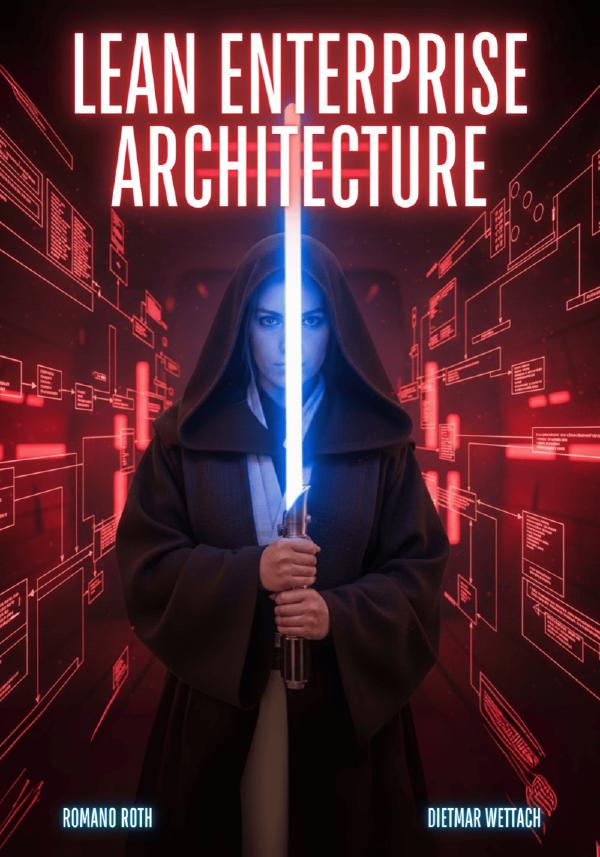
There is a pattern to how enterprise architecture fails. The models get more detailed, the governance gets heavier, and the people who make the real decisions stop showing up. The architecture is correct and nobody uses it.
Most AI projects do not fail on the technology. They fail earlier, on a thinking error: the hunt for one giant use case, the lighthouse project.
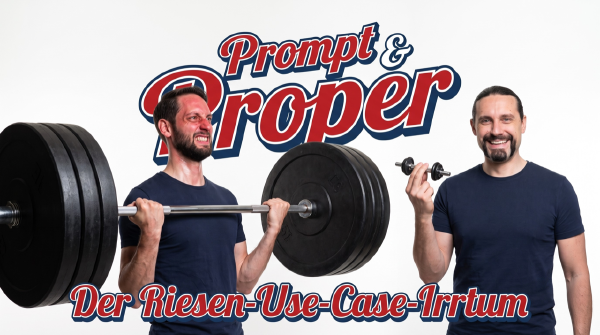
This is the launch of my new podcast Prompt & Proper, which I host together with Steffen Ochsenreither from Swiss Post. Every two weeks, in German, hands-on and without the marketing speak. Episode 1 takes apart what we call the “giant use-case fallacy”: why the management signal “we are doing AI now” so often ends in nothing, and what a good first use case actually needs. The episode is in German, and this post captures the core of the conversation.
Most innovation does not die at the patent office. It dies long before that, in the way an organization makes decisions, executes, and turns ideas into outcomes.
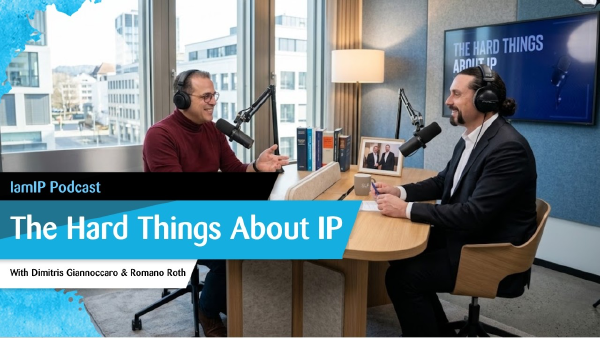
I was invited onto The Hard Things About IP, hosted by Dimitris Giannoccaro and produced by IamIP, for Episode 7. We stepped beyond patents and legal frameworks to the question that sits before every filing: how do organizations actually turn ideas into real results? We talked about AI transformation, organizational design, why so many AI initiatives get stuck in pilot mode, how feedback loops drive decision-making, and why accountability needs to live where the work happens.
Artificial Intelligence does not decide Europe’s future. Human decisions do. In this talk, I show what you can do differently starting tomorrow: which skills to build, how to choose AI tools, and how to reduce dependencies. No moral finger-wagging, just straight talk.
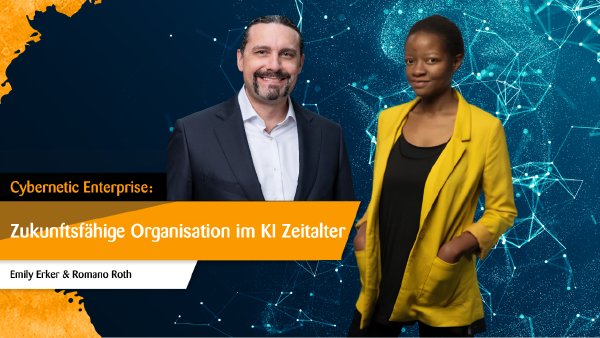
I joined Emily Erker on her show Lady Sunshine Live for a German-language conversation about building future-ready organisations through what I call a cybernetic enterprise: the integration of people, processes, technology, and AI in continuous feedback loops. The full video is embedded below; what follows is my English summary of the key ideas we covered.
Banks spend 93% of their AI budget on technology. Only 7% goes to people. And then they wonder why 95% see no impact on their P&L.
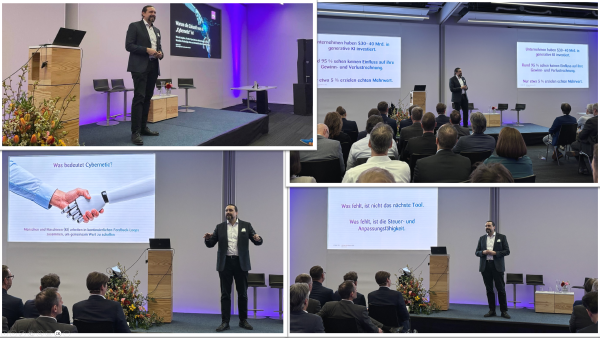
On March 31, 2026, I gave a keynote at the Zühlke Banking Talk in Schlieren on why the future of AI is “cybernetic” and what it takes to become an AI-native bank. The evening brought together perspectives from academia, a major German bank, and practitioners from Swiss financial institutions.
How to build adaptive, AI-native organizations where people, technology, data, and AI models work together efficiently.
$30 to 40 billion invested in generative AI globally. 95% of companies see no impact on their P&L. Only 5% create real value. Companies spend 93% on technology and only 7% on people. What is missing is not the next tool. What is missing is the ability to steer and adapt.
In this LeanPub podcast episode, host Len Epp and I have a deep conversation about my book “The Cybernetic Enterprise: How to Build a Future-Ready Organization.” We cover everything from my career journey at Zühlke, to why the future is cybernetic rather than just AI, to the practical steps of enterprise transformation. If you have ever wondered what it takes to build an organization that can continuously adapt, this conversation covers the essential ideas.
A model that cannot be measured stays an opinion. The Assessment turns the Cybernetic Enterprise into a structured maturity check across four dimensions: people, process, technology and data.
It is built to be run. Questions per dimension, levels that describe observable behavior instead of intent, and a result you can put next to the same unit six months later.