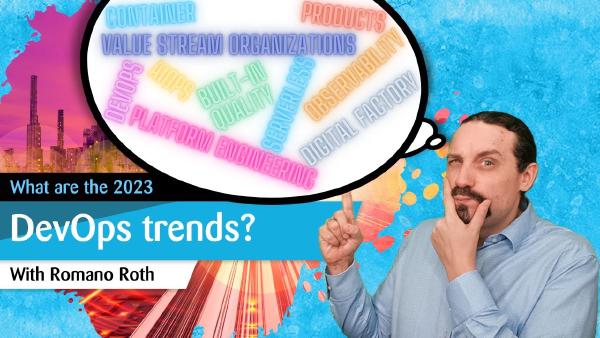
Two years of trend predictions later, the DevOps conversation has shifted. In 2021 we talked about adoption. In 2022 we mapped trends onto the adoption lifecycle. In 2023 the most useful lens is the value stream: how products get built, run, quality-assured, monitored, organised, enabled and industrialised end-to-end. Most organisations still suffer from silos and project-based annual planning. The 2023 trends are about closing those gaps.
I was invited to deliver the keynote at the Baloise OpenX Day, an internal conference where Baloise brings together their technology community. The session combined impulse presentations with interactive discussions, giving me the chance to share DevOps fundamentals and then hear directly from the teams about their real challenges. The conversations with the Baloise engineers were incredibly valuable, especially around topics like continuous deployment in regulated industries and the role of platform engineering.
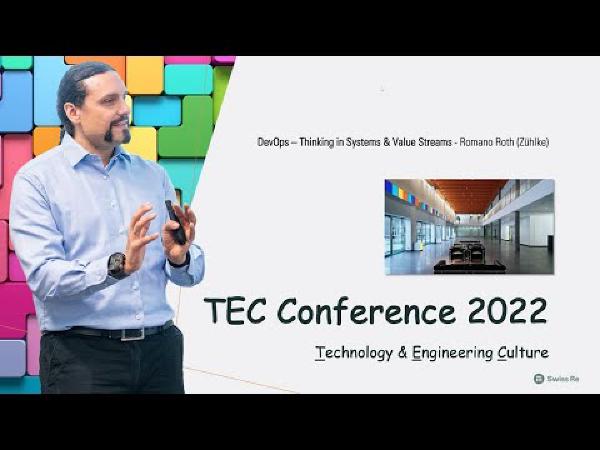
In this conference talk, I discuss one of the most fundamental topics in DevOps: thinking in systems and value streams. When I work with companies on their DevOps transformations, I consistently see the same patterns. The business has bright ideas. They write them into Word documents and Jira tickets. They throw them over a wall of confusion to development. Development builds something and throws it to testing. Testing compares what was specified with what was built (never quite the same), tests something, and throws it to operations. Operations asks “How can we operate that?” and somehow, with great effort, they get it running. Then the customer sees it and says: “What is that? That is not what we ordered.”
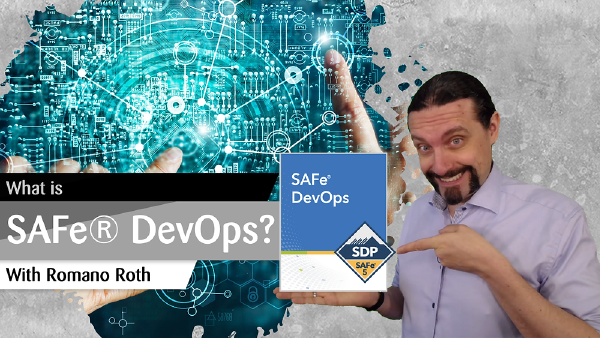
The SAFe® for DevOps training is an assessment or a workshop that is ideally suited for teams. Why? Because the focus is on driving the value stream of these teams. Addressing questions, challenges, and any potential obstacles - we can work on the training to provide value to them. We will give them the theory input of what exactly DevOps is.
Learn is the last step of the SAFe for DevOps Health Radar, and in many ways it is the most important one. This is where we make the hard decisions about where to invest, where to stop, and how to continuously improve everything we do. In this video, I walk through what the Learn step involves and why it is the key to building the right thing right.
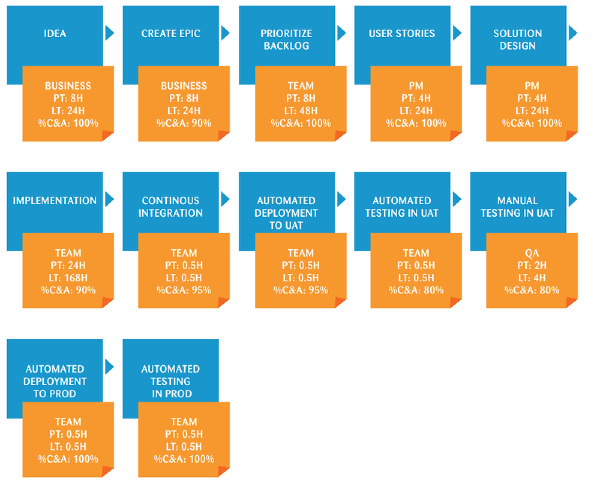
Value stream mapping is a lean management method for improving the flow of value from idea to production. It offers insight into the efficiency of an organisation and can help to identify bottlenecks and improve value flow. The primary goal is to eliminate any waste.
In this video, I explain what the SAFe for DevOps training is all about. Unlike traditional classroom courses, this training is a hands-on workshop where real teams work on their own value streams and leave with a concrete, prioritized action plan.
The first way to introduce DevOps is to optimise the value flow from development, through operations, all the way to the customer. This is the First Way in Gene Kim’s Three Ways framework — and it is where every transformation should start.
The DevOps business case rarely fails because the technology does not work. It fails because nobody can explain, in money terms, why doing it faster matters. Here is the version that lands with a CFO: a dollar today is worth more than a dollar tomorrow, and a feature in production today earns money that a feature in next quarter’s release does not.
If you ask a development team where value is created, you will hear a dozen different answers. In the planning workshop. In the sprint. At the demo. At deployment. They are all wrong — and getting this wrong is what makes most DevOps business cases fall apart on contact with the CFO.